
Reflections by Nelly Mecklenburg, MCLD’s Senior Manager of Learning & Network Weaving
As part of our work to understand and shape the future of our sector, MCLD is committed to demystifying and participating in multilateral decision-making spaces, making sure local organizations are meaningfully part of the conversation.
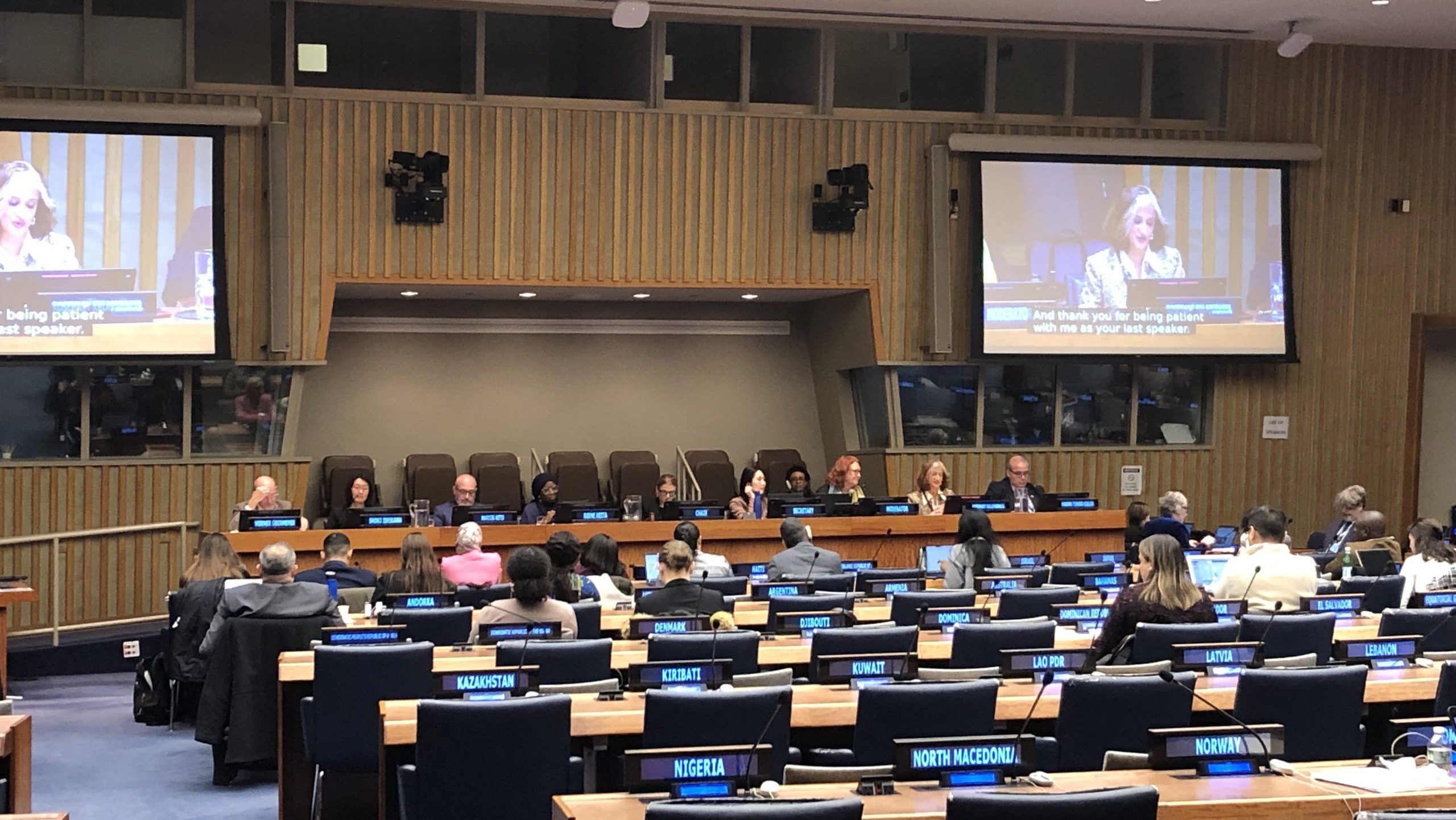
In February 2026, MCLD participated in the 64th Commission for Social Development (CSocD64), which took place at the UN Headquarters in New York. CSocD is a commission within the United Nations Economic and Social Council (ECOSOC) that promotes and advises on social development policies to advance the Sustainable Development Goals and UN vision. It is a much smaller forum, with less fanfare than some of the other UN Headquarters events like the Commission on the Status of Women (CSW) held in March, the High Level Political Forum (HLPF) held in July, or the General Assembly (UNGA) held in September. However, it is an opportunity for UN agencies, civil society, and ministers of social development, labor, housing, health, women, and children’s affairs to meet, share progress and challenges, and hold each other accountable. This year, there was particular focus on care and support ecosystems, buttressing social protection policies, policy coordination, and resource inequity. Ministers and senior officials from both member states and UN agencies laid out their achievements and plans, while civil society advocated and offered ideas.
Unsurprisingly, a question hanging over the discussions was how to finance these commitments. Official Development Assistance (ODA) is decreasing, and social protection is getting less attention from key funders, including the World Bank. There were the usual generic calls for more funding and more efficiencies. However, some participants – especially from civil society – pressed for alternative [approaches/visions] to sustaining critical programming for communities:
Cooperatives can support economies, communities and growth in a locally-led and -empowered way.
Several events featured discussion on the role of cooperatives, which as the International Cooperative Alliance (ICA) writes, are “people-centred enterprisesowned, controlled and run by and for their members to realise their common economic, social, and cultural needs and aspirations.” Rather than extract from labor, cooperative models can give workers more voice and challenge structural barriers, as highlighted in the session on “Strengthening Grassroots Cooperative Institutions as Catalysts for Social Justice, Economic Resilience and Gender Equality” hosted by the Working Women’s Forum (India) – Indian Cooperative Network for Women (WWF-ICNW). Whereas employer representatives pushed for the formalization of the economy as a way to create higher productivity and a wider tax net to help finance social development, advocates of cooperatives argued that they offer a model that would change how wealth is created, owned and controlled.
Recognize care work and social protection as investments rather than expenses.
Everyone from employers to ministers of finance sees systems of care for the vulnerable – children, elderly, the disabled – as a financial drain. However, as many sessions at CSocD64 highlighted, these systems enable healthy, safe, educated, skilled, fulfilled, contributing members of society. These systems are the backbone of thriving economies and societies. Investments in robust, fair care and social protection ecosystems have the greatest returns – and a growing number of member states are acknowledging this.
Coordinated community action is social protection.
As we have seen over and over again, when crisis hits, communities are the first responders. Whether that is the Covid-19 pandemic or the Wang Fuk Court fire in Hong Kong in November 2025, as discussed in the panel “Empowering Communities: Strengthening Local Participation for Inclusive and Responsive Social Services”, hosted by the International Council on Social Welfare – ICSW. Community mobilization is usually the quickest, most functional, and most cost-effective response. It is important to support infrastructure and systems for community action and coordination with local government and the private sector when there is no crisis so that they are prepared and equipped when there is a crisis. Community-led development, which brings community members together to collectively identify, implement and maintain local development initiatives, provides a framework for that ongoing collaboration.
Review and revise international tax systems so that the wealthiest people and corporations pay their fair share.
In several panel discussions, the International Organization of Employers pushed for more formalization of the economy, arguing that this would create higher productivity, expansion of the economy, and a wider tax net. What they didn’t talk about – but participants including from Human Rights Watch did raise – is that we shouldn’t talk about expanding taxes on the smallest businesses without discussing how huge multinational companies are getting away with paying less taxes. Currently a proposed United Nations Framework Convention on International Tax Cooperation is being negotiated which is an opportunity to establish fairer, better coordinated rules for taxation. The results of these negotiations could have huge impacts on how corporations are taxed, and therefore on the tax revenue for governments in the Majority World – leading to more public funding for social services, protection, and development.
As part of MCLD’s focus on demystifying multilateralism and exploring alternative resource mobilization mechanisms in a post-ODA world, we may look more closely at each of these approaches.