
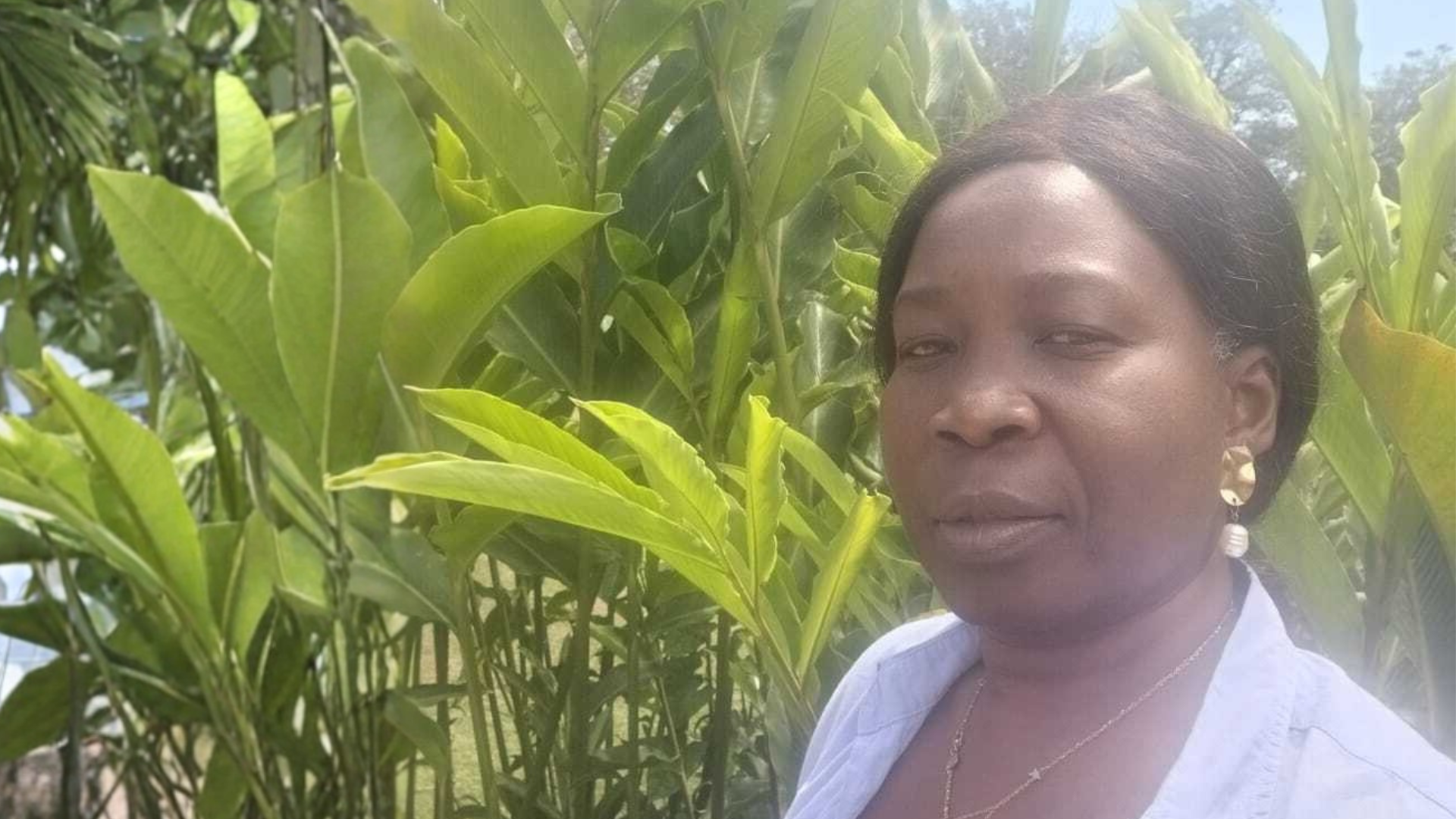
For the past decade, MCLD’s work has been shaped by incredible people. Voices of the Decade is a new interview series featuring the leaders, partners, and changemakers who helped build our community. Their answers are human, thoughtful, and an encouraging reminder of MCLD’s impact. This first interview features Ela Esma Lopez Chavez, member and co-coordinator of MCLD in Honduras.
Ela Esma Lopez Chavez – Growing MCLD in Latin America and the Caribbean
Honduras became the first country to create a National Association in the Latin American and Caribbean region. Why did you decide to do so?
Because we felt a real need. In Honduras, there were many people and organizations working for communities, but there was no space where the communities themselves were the protagonists. Creating the National Association was about saying: “Enough of being beneficiaries, now we are not subjects, we are leaders, and we are the ones who set the path.” We wanted to unite our voices, feelings, and struggles from different territories to further advance collective strength. And that was what moved us.
What does community-led development mean in the context of the Latin American and Caribbean region?
It means that solutions do not come from outside, but from the wisdom of the people. In our region, with so much cultural diversity, community-led development means recognizing that each territory knows what it needs, knows how to take care of itself, and knows how to grow. It is an act of dignity and justice.
What have been some of your first contributions to MCLD? Is there a particular moment that you see as a milestone of transformation and the beginning point for ANDLCH Honduras?
Our first contribution was to put communities at the center, not just in words, but in practice. Listening, articulating, and opening spaces for women, youth, Afro-descendants, and indigenous peoples to say, “this is how we want to move forward.”
A key moment was when, after several processes of dialogue, the communities themselves said: “Yes, this is ours, we are here and we want to walk together.” That was the real beginning.
If MCLD could make one big change in Honduras, what would you like it to be?
That it would make the state and cooperation agencies understand that without communities there is no sustainable development. That the decision-making tables should have chairs occupied by women leaders, young people, and community organizations with a real, not tokenistic, voice.
What advice would you give to your colleagues in Latin America who are thinking of joining MCLD?
Take the plunge without fear. MCLD is not a logo; it is a different way of doing things, more humane, more horizontal. I would say to them: “Join us if you are willing to listen more, impose less, and walk at the pace of the people.”
How has MCLD influenced your perspective and your work?
It has reaffirmed that communities are not vulnerable: they are powerful, they just need opportunities and recognition. MCLD has helped me see development from the inside and from the bottom up, not from the office or from behind a desk.
What concrete steps can readers in Latin America take to make their work more community-led?
Three simple things:
- Listen before you plan.
- Include the community from the beginning, not at the end.
- Leave behind installed capacity, not dependency.
How can MCLD grow and become more inclusive in the Latin American and Caribbean region?
By being more diverse. By integrating more voices from people of African descent, indigenous peoples, young women, and rural communities. And above all, by expanding spaces where small organizations also have a place, not just large ones.
What local terminology/word best reflects the concept of Community-Led Development (CLD)?
In Honduras, we use a phrase that is very much our own: “Juntos y desde la comunidad.” meaning “Together and from the community.”
Because it sums up the essence: building collectively, respecting the origin, culture, and territory.
Interview in its original Spanish
Honduras se convirtió en el primer país en crear una Asociación Nacional en la región de América Latina y el Caribe. ¿Por qué decidieron hacerlo?
Porque sentimos una necesidad real. En Honduras había muchas personas y organizaciones trabajando por las comunidades, pero no existía un espacio donde las comunidades mismas fueran las protagonistas. Crear la Asociación Nacional fue decir: “basta de ser beneficiarios, ahora somos sujetos, somos líderes y somos quienes marcamos el camino”. Queríamos unir voces, sentires y luchas de diferentes territorios para tener fuerza colectiva. Y eso nos movió.
¿Qué significa el desarrollo liderado por las comunidades en el contexto de la región de América Latina y el Caribe?
Significa que las soluciones no vienen de afuera, sino de la sabiduría de la gente. En nuestra región, con tanta diversidad cultural, el desarrollo liderado por las comunidades es reconocer que cada territorio sabe lo que necesita, sabe cómo cuidarse y sabe cómo crecer. Es un acto de dignidad y de justicia.
¿Cuáles han sido algunas de sus primeras contribuciones a MDLC? ¿Hay algún momento en particular que te resulte un hito de transformación y comienzo definitivo en ANDLCH Honduras?
Nuestra primera contribución fue poner a las comunidades en el centro, no como un discurso, sino como práctica. Escuchar, articular y abrir espacios para que mujeres, jóvenes, pueblos afro e indígenas dijeran: “así queremos avanzar”.
Un momento clave fue cuando, después de un proceso de diálogo, las mismas comunidades dijeron: “sí, esto es nuestro, aquí estamos y queremos caminar juntas”. Ese fue el verdadero comienzo.
Si MDLC pudiera hacer un gran cambio en Honduras, ¿cuál le gustaría que fuera?
Que logre que el Estado y la cooperación entiendan que sin las comunidades no hay desarrollo sostenible. Que las mesas de decisión tengan sillas ocupadas por lideresas, jóvenes y organizaciones comunitarias con voz real, no simbólica.
¿Qué consejo le daría a sus colegas de América Latina que están pensando en unirse a MDLC?
Que den el paso sin miedo. MDLC no es un logo; es una manera diferente de trabajar, más humana, más horizontal. Les diría: “únete si estás dispuesto a escuchar más, a imponer menos y a caminar al ritmo de la gente”.
¿Cómo ha influido MDLC en su perspectiva y su trabajo?
Me ha reafirmado que las comunidades no son vulnerables: son poderosas, solo necesitan oportunidades y reconocimiento. MDLC me ha ayudado a ver el desarrollo desde adentro y desde abajo, no desde la oficina ni desde el escritorio
¿Qué medidas concretas pueden tomar los lectores de América Latina para que su trabajo esté más liderado por las comunidades?
Tres cosas simples:
- Escuchar antes de planificar.
- Incluir a la comunidad desde la idea, no al final.
- Dejar capacidad instalada, no dependencia.
¿Cómo puede MDLC para crecer y ser más inclusivo en la región de América Latina y el Caribe?
Siendo más diverso. Integrando más voces afrodescendientes, indígenas, de mujeres jóvenes y rurales. Y sobre todo, ampliando espacios donde las organizaciones pequeñas también tengan lugar, no solo las grandes.
¿Qué terminología local/palabra refleja mejor el concepto de Desarrollo Liderado por las Comunidades (DLC)?
En Honduras usamos una frase muy nuestra:“Juntos y desde la comunidad.”
Porque resume la esencia: construir en colectivo, respetando el origen, la cultura y el territorio.