
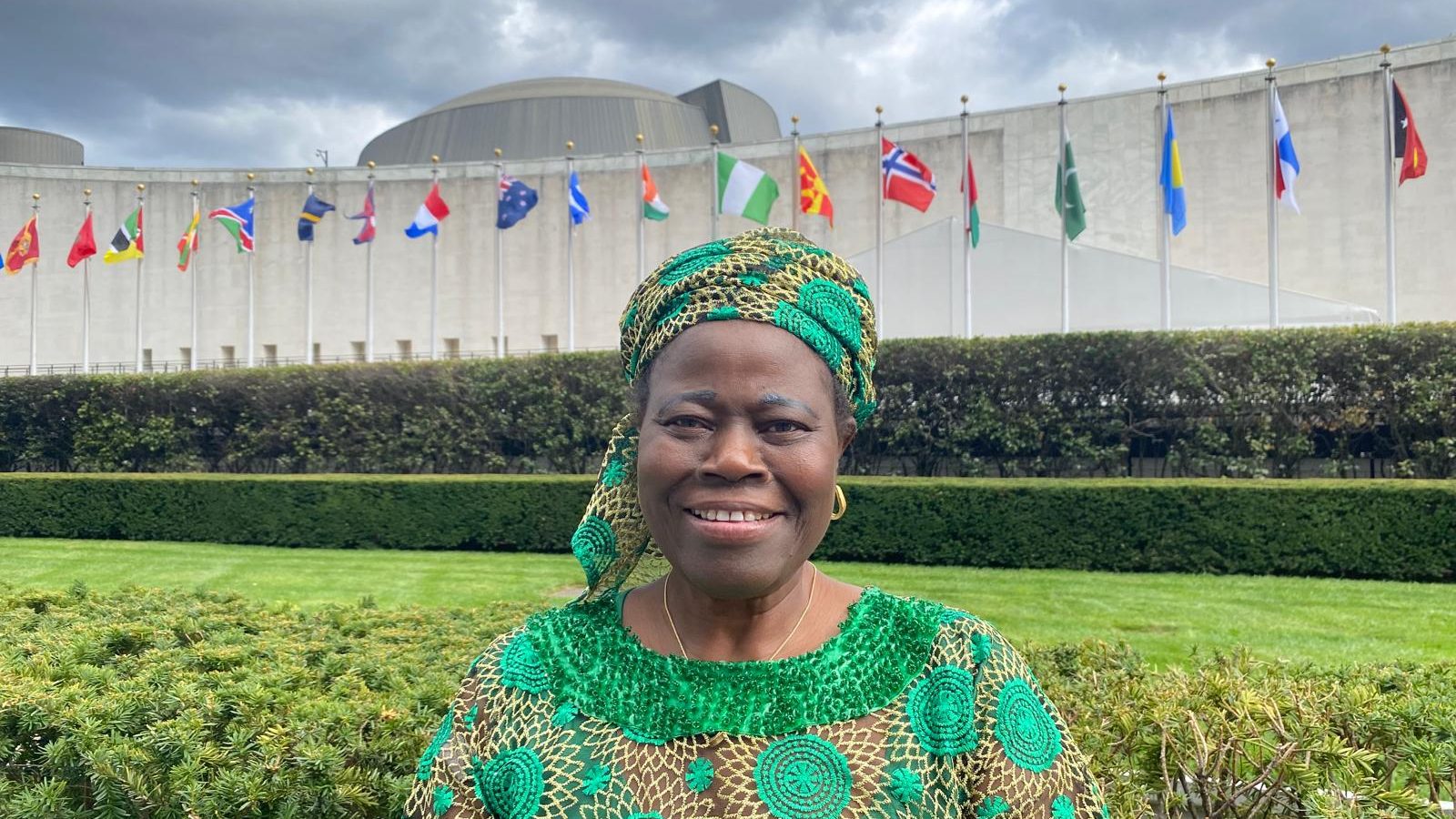
For the past decade, MCLD’s work has been shaped by incredible people. Voices of the Decade is a new interview series featuring the leaders, partners, and changemakers who helped build our community. Their answers are human, thoughtful, and an encouraging reminder of MCLD’s impact. In this interview, Dr. Rebecca Dali, Coordinator of MCLD’s first registered National Association in Nigeria, shares how a coalition of locally led organizations grew into a national movement, the lessons they’ve learned about sustaining collective action, and why local leadership is essential to achieving lasting change.
This interview has been edited for length and clarity.
Dr. Rebecca Dali – Building a National Voice for Local Organizations in Nigeria
You brought together MCLD’s first registered National Association, one comprised entirely of local organizations. Tell us about the early days of getting MCLD in Nigeria started – what did it take, and did you face challenges?
When I met Gunjan in 2019, I was struck by how she spoke about community-led development. She gave language to an approach that my organization, CCEPI (the Center for Caring, Empowerment and Peace Initiatives) had already been practicing. After attending one of MCLD’s Global Calls, I wrote a letter to around 17 community-based organizations that I knew would be interested and suggested a meeting of the minds. All of them said yes.
Within a short time, we formally registered in Nigeria, elected our leadership, adopted the name Strategic Action for Community-led Development Nigeria (SACD-N), and developed our constitution and bylaws.
Bringing organizations together was not the difficult part; that came after registration. Many members assumed that MCLD was a funding organization and expected financial support. I have had to make this very clear: MCLD strengthens our capacity, amplifies our collective voice, and connects us, but we will mobilize resources on our own as an Association.
That mindset has been transformative. I keep track of funding our members receive and their reach. Collectively, in one year, we reached more than two million people. We know our impact is significant, but sustainable fundraising remains one of our greatest challenges.
My organization, CCEPI, is 37 years old. Whether we have had funding or not, we have continued to serve our communities. I often share this example to motivate our members in Nigeria. We will not wait for someone else to solve our problems before we act.
Another important shift has been to support members in seeing themselves as representatives of both their own organizations and our collective National Association. Today, we approach opportunities as a network, sharing knowledge, experiences, and lessons so that every member can grow stronger.
In light of that collective sharing, what else makes a National Association successful?
A successful National Association is built on a shared vision, active participation, and consistent momentum. We meet, we share our thoughts together, and we all grab activities together. Our members are dedicated – if I call on them to join an activity we are organizing, I know they will come. The most successful activities that we do together are our campaigns, where everyone works together.
In Nigeria, we have created different groups to keep people engaged, like committees that bring suggestions and move them forward. That shared ownership keeps people engaged because everyone knows they have a role to play.
Strong facilitation also matters, and leadership requires persistence. I am resilient, and when I put my hands to achieving something, I will achieve it, but leadership requires more than one person. Our members are also resilient – most of them work in crisis areas. Our members cheer me on as a leader and they all support me. Likewise, I see my role as encouraging them to succeed and lead.
What are some of the biggest transformations you’ve seen in MCLD Nigeria from 2019 to now?
The greatest transformation has been our visibility and influence.
SACD-N now has 27 organizational members across Nigeria. Together, we are making more of an impact, reaching more in communities, and contributing to national conversations around election violence and gender-based violence.
In 2023, we organized a nationwide campaign against violence during elections, promoting peace through radio broadcasts and community outreach visits across 210 communities. We encouraged citizens to reject manipulation and exercise their right to vote freely. Nigeria saw a 40% reduction in election-related violence during that year’s election. While many factors contributed to that shift, we are proud that our collective efforts formed part of the broader movement toward peace. Based on media and broadcast data, we believe we reached approximately 19 million people.

People increasingly recognize us as a trusted voice. Communities know we speak to issues that affect them and advocate for change. The awareness that we are raising is having an impact, and I do believe that without the advocacy and lobbying of SACD-N and CCEPI, some of the bills that have been passed by local, state (such as Adamawa, Borno, Plateau) and federal governments of Nigeria to strengthen child rights and criminalize specific violent acts and gender-based abuses would not have been achieved.*
Why is collective action important, especially in today’s world?
Collective action allows local organizations to achieve together what none of us could accomplish alone.
Our members are present in 22 states in Nigeria. Without collective action, a single organization could serve in a few local governments or a few of those states, but together, we have a national presence that dramatically increases our reach and our influence. If we speak, we speak on behalf of millions. That gives weight to our advocacy. It is also a morale boost for organizations to be doing this work together. We know we are not working in isolation.
Collective action has given us a platform to reach farther than we could have imagined alone. During our 2025 campaign for the 16 Days of Activism Against Gender Based Violence, CCEPI and SACD-N partnered with local organizations and government institutions from Plateau and Adamawa States to organize community road walks, public awareness events, and television programming. The result? We reached over 50 million people through TV, radio, and grassroots action across six states.
What does MCLD offer to local and community-based organizations? Would you recommend others to join? Why?
The greatest benefit is that if you are in MCLD, you will not be alone. You become part of a global community of organizations that support one another, share resources, and exchange knowledge. MCLD is bringing people together left, right, and center, all around community-led development; that solidarity is so valuable.
MCLD creates spaces where everyone can participate with respect and integrity. They have a voice and are trusted to lead conversations. Everybody is involved, that is what makes MCLD special. Everyone is counted and is dignified.
About Dr. Rebecca Dali
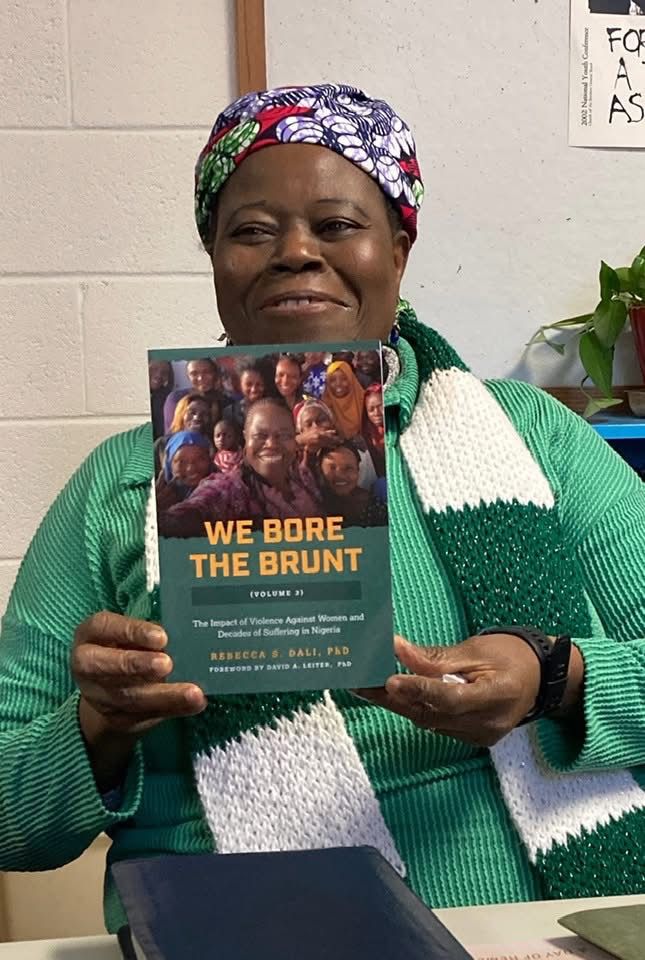
Dr. Rebecca Samuel Dali, Ph.D. is an ordained Minister of Church of the Brethren, also the founder of Centre for Caring, Empowerment and Peace Initiatives (CCEPI) in Adamawa State, Nigeria, and Dali is the Nigerian Coordination of Strategic Action for Community Development, Nigerian Association of MCLD. In 2017, Dr. Rebecca was awarded the United Nations Sergio Vieira de Mello Humanitarian of the Year award for her work with CCEPI to reintegrate returend Boko Haram abductees and commitment to supporting the most vulnerable in Northern Nigeria.
She has written and published several books on the subject, including the recent We Have Walked in Each Other’s Shoes and We Bore the Brunt: The Impact of Violence Against Women and Decades of Suffering in Nigeria.
* For example, a law to strengthen Violence Against Persons (Prohibition) Act (VAPP). This was a landmark Nigerian law initially passed in 2015 and strengthened/adopted by many states around 2021. CCEPI’s legal adviser (who later also became SACDN Secretary) Bar. Ibrahim A Maspalma played a very important role in the enactment of this law. I believe that other laws, such as the Child Rights Act (CRA), 2003, would not have been achieved without our advocacy.