
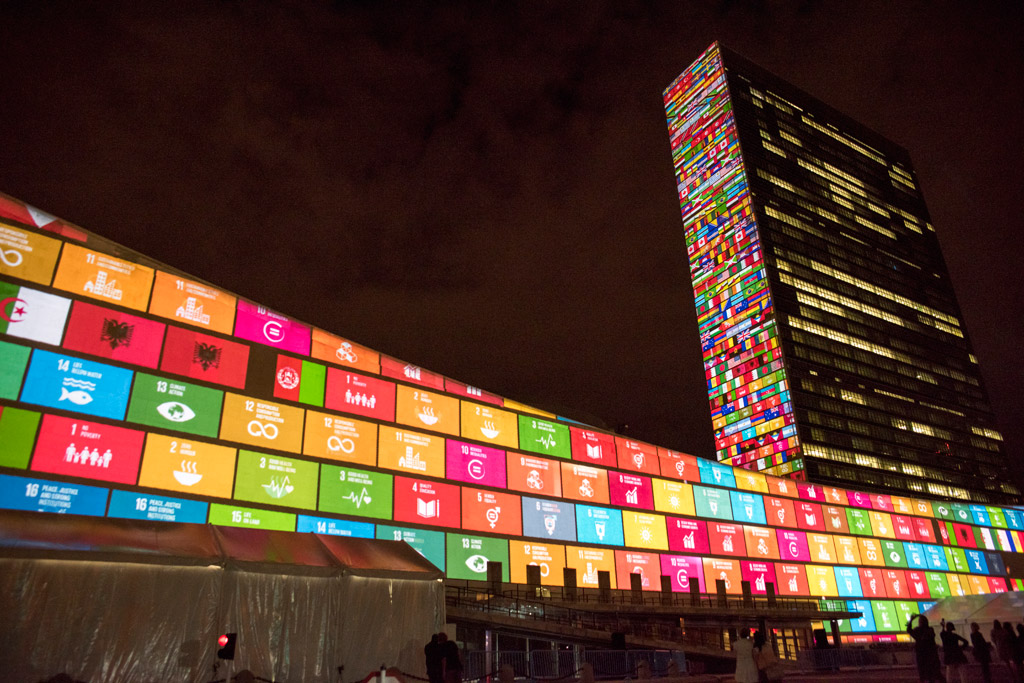
As global citizens, it is not only important that we think about Transforming our world: the 2030 Agenda for Sustainable Development — better known as the SDGs or the Sustainable Development Goals — but also that we transform how we think about them.
In the year 2000, the nations of the world signed a Millennium Declaration setting a bold agenda at the start of the century for achieving a world free from hunger and poverty. They created an initial set of 8 Millennium Development Goals (the MDGs) to get us halfway there by 2015.
Despite a very slow start and great initial cynicism, the world did far better on the MDGs than many people expected. This resulted in the world adopting a set of goals to finish the job — and to incorporate key components left out of the MDGs. (See earlier discussion on the differences at this link).
Here are my top 10 recommendations.
- Don’t think of them as “17” but as “1.” The SDGs recognize that the challenges of poverty, hunger, conflict, the environment and discrimination are inextricably linked and can only be solved through an integrated approach. You will hear people say “Goal X (fill in any number 1 to 17) is really the key to solving all the others” and they will be right in a way. But if you focus on any goal without fully taking account the complete system, the SDGs will not succeed.
- The SDGs are for every country. Every nation on earth has poverty and discrimination. Every nation is threatened by crime, violence and climate change. This is a paradigm shift — from focusing on aid from rich countries to help poor countries, to every nation working in alignment for a world that works for everyone.
- The SDGs apply at every level. Similarly, the SDGs recognize that progress is not just the job of national governments. In fact, many of the key challenges must be solved in local communities.
- Going for the “High-hanging fruit.” When you are trying to get “half-way” you start on the easiest pathways to progress – the “low-hanging fruit.” But to include everyone, you have to start with the most difficult situations – the most remote, the most marginalized – because that will take the longest.
- Good governance. SDG16 was highly controversial and had been long taboo at the UN (so as not to offend bad governments) but this time it made it through.
- Partnership, not patronage. In the 2000s there were numerous conferences that led to breaking the old “donor-recipient” paradigm to put countries in the drivers seat of their own development. (Only in 2023 did that start to reach down to communities).
- Harvesting the data revolution. In the run-up to the SDGs, governments saws the importance of better data — progress since then has been rather slow but perceptible.
- Recognizing communities. With enormous pressure from NGOs and networks of local governments, “communities” made it into SDG11 and SDG16. Local government still lack a “seat at the table” in UN decision-making, but they are now very active in all conferences.
- Climate Change. SDG13 continues to be controversial, however anyone who believes in science (ie, in objective reality) now recognizes that addressing climate change must be a top priority.
- Peace. The hope for a post-cold-war peace which led to the optimism and progress during the MDG period has evaporated, and the number of armed conflicts have increased. The deadline combination of Conflict and Climate Change has reversed progress on many of the SDGs.