
Thought Piece by Cathy Amenya, Manager of Programs and Partnerships at MCLD
The Movement for Community-led Development (MCLD) has been advocating for localization and decolonization of aid for the last ten years. We have been pushing for communities to participate in decision-making processes on issues that directly affect them. This work often means being the disruptors in spaces that resist change.
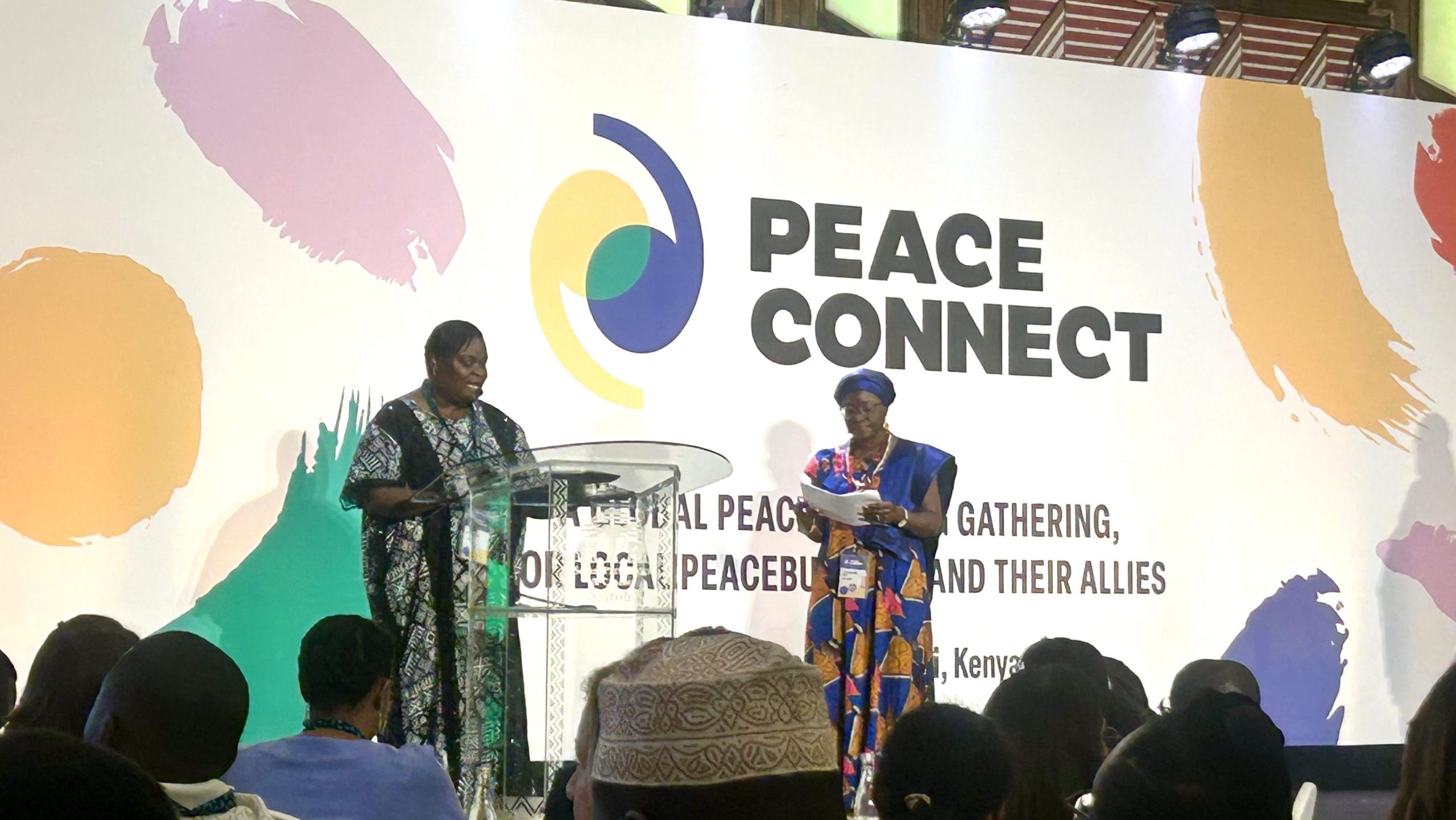
In October 2025, I attended Peace Connect organised by Peace Direct‘s, and for the first time, I was in a space where I didn’t have to argue for these principles. The other participants already agreed! We belonged! We were home! The conference also focused on self-care for peacebuilders, who usually neglect themselves while caring for others. This is something that is constantly ignored or undervalued in peacebuilding and the development sector, so kudos to Peace Direct for showing us what matters most.
Peace Connect confirmed things I have known but rarely heard acknowledged in these spaces. I had three main takeaways, all connected by a single thread: who holds power, whose voices matter, and who controls the narrative.
Communities have always lived the post-Official Development Assistance (ODA) reality
This year, people have been discussing the post-ODA world as if it were a new situation. But the reality is far more complex than these conversations often acknowledge.
For many communities, the current situation is not new at all. Grassroots organizations have never received much direct funding. Many have given their own time and resources to development and peace work until they have nothing left. In this sense, operating without substantial resources has always been their reality.
Yet the collapse of ODA flows affects these same communities in profound ways. Even when they did not receive funding directly, ODA has been built into the systems they depend on: the health facilities where they access treatment, the schools their children attend, the services that form part of daily life. When these systems struggle or close, the disruption is immediate and real. The dependency was forced upon communities, not chosen by them, but it exists nonetheless.
What is most troubling is who is shaping the conversation about what comes next. The people discussing the post-ODA world are largely the same ones who have been receiving and managing ODA money: international organizations and, yes, some local organizations too, though very few. But the vast majority of communities and grassroots organizations are still not at the table where their futures are being decided. This is fundamentally about power in the sector.
The conversation we need is not simply about funding. It is about building resilient systems within our own countries and communities that can break this cycle of forced dependency. But communities must be central to these conversations. They need to shape their own narratives and solutions, not be talked about or have decisions made on their behalf. Only then can we move toward systems that serve communities rather than creating dependencies that leave them vulnerable when external funding collapses.
Our sector needs to stop creating barriers with language
Second, the sector keeps creating new terms, then spends money writing documents to explain what these terms mean. This does not make sense. The focus should be on using language that people can understand.
Take food security when what we really mean is lack of access to food and poverty. Or “localization” when what we mean is communities participating in decision-making processes and ensuring they receive funds directly. Every few years, new terms emerge. Organizations then spend money on consultants to write papers explaining what these terms mean, hold workshops to train staff on the new language, and create frameworks to implement them. This cycle repeats with each new term.
The problem is that these terms often describe things communities have been doing all along. They just use different words for it. This money spent on defining and explaining new terminology could go directly to communities. Instead, it goes to people who write about communities. It also creates barriers. Communities have to learn new language to access funding or participate in conversations. If they don’t use the right terms, they are seen as unsophisticated or not understanding the work. But they do understand the work. They are doing it. They just do not use the same words.
This is about who controls the narrative. The sector controls it by controlling the language. The sector should use simple, clear language that doesn’t change every few years. Say what you mean directly.
All conflict causes the same bleeding
Third, insecurity affects everyone in conflict areas. Pain from conflict should not be compared or ranked. No conflict is worse than another. In spaces where people from different conflicts gather, we need to remember that all victims suffer the same way.
When people from different conflict regions come together, there can be an unspoken hierarchy of suffering. Some conflicts get more attention, more funding, more sympathy. But for the person who has lost a family member or been displaced, the pain is the same. Their loss is absolute. Their fear is real.
This is about whose voices matter. When someone’s conflict is treated as less important, it dismisses their experience and silences their voice. In any gathering, people are carrying their trauma with them. Sensitivity means recognizing that everyone in the room has bled. Everyone has lost something. There is no scale for measuring grief or fear. Each person’s experience deserves respect and space.
Moving Forward
Peace Connect showed us what it looks like when communities and their allies stop fighting for basic recognition and start building together. That space exists because Peace Direct created it intentionally. Other organizations can do the same.
Stop talking about communities. Talk with them. Stop creating new terms. Use plain language. Stop ranking suffering. Recognize all pain as equal. These are not complicated asks. They require giving up power, not gaining new skills.
The development and peacebuilding sectors need to ask themselves: are we creating spaces where communities belong, or spaces where they have to fight to be heard? Are we using our resources to benefit communities, or to maintain our own positions? Are we honoring all experiences equally, or only the ones that fit our priorities?
For the last ten years, MCLD has been pushing against closed doors. Peace Connect showed me what happens when the door opens. More spaces need to open their doors. Communities are ready. They have always been ready. The question is whether the sector is ready to let them in.