
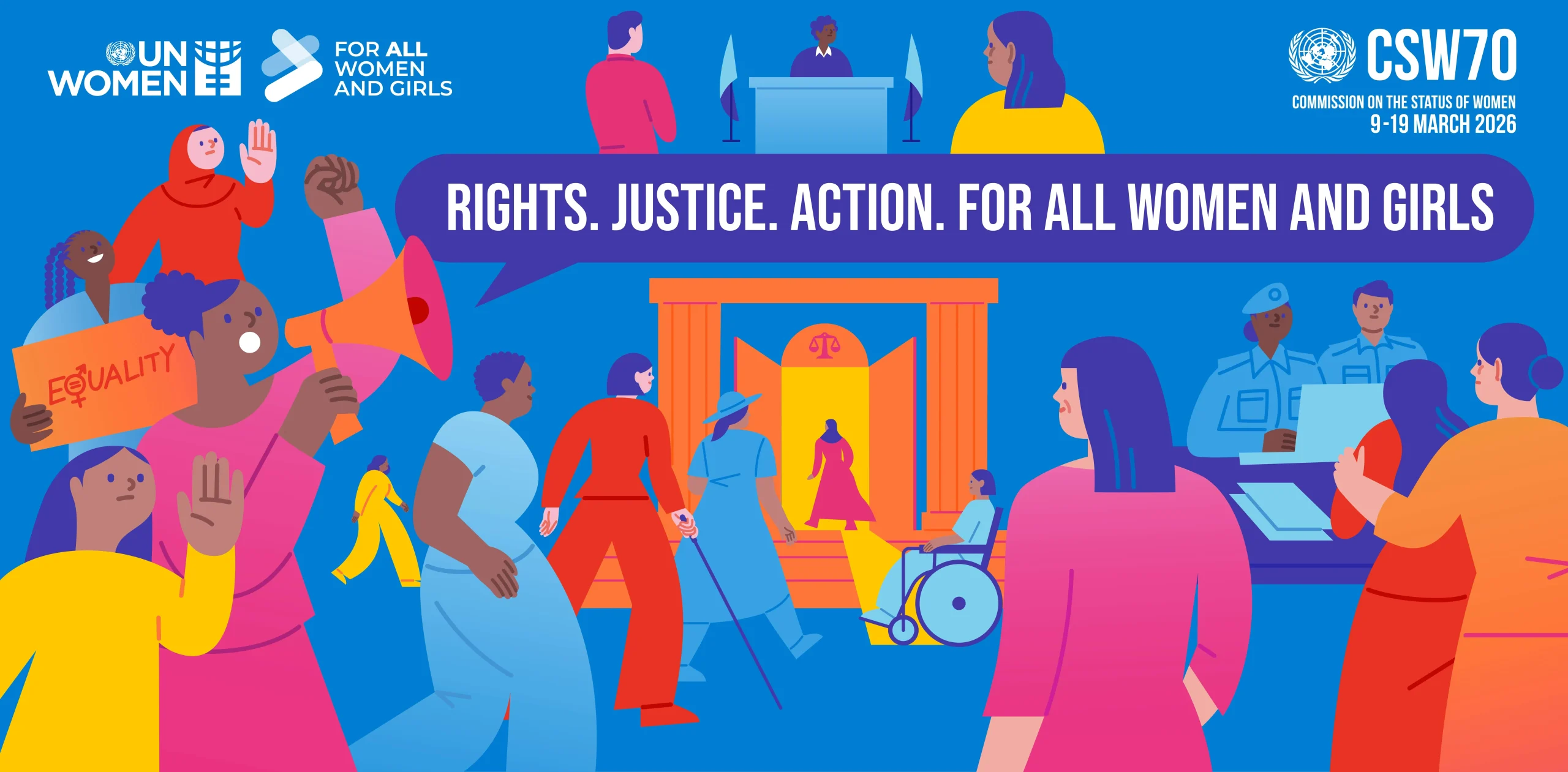
The Commission on the Status of Women (CSW) is an annual gathering of policymakers, global leaders and civil society focused on women and gender equality. It happens in March every year at the United Nations Headquarters, with many side events occurring virtually and in person. CSW is an opportunity to take stock of the last year, assess gaps, and shape future policies.
Members of the Movement for Community-led Development (MCLD) were spread across the action at the 70th Commission on the Status of Women. Read about what stood out from the conversations in New York City, USA, below.
Regina Portilla, Peace Direct
CSW69 just wrapped, and I’m leaving with a complicated mix of exhaustion and, unexpectedly, a flicker of hope.
Civil society showing up to CSW has never been a given. Not long ago, there was an active movement to boycott the space altogether. This year, that tension was compounded by something heavier: the boldest, most coordinated assault on the gender agenda in recent memory, and a continuing deterioration in safety for those who work on these issues. And yet, civil society showed up. That itself is worth sitting with.
The silver lining came in the adoption of the agreed conclusions. For the first time, there was a vote rather than consensus. What it revealed was unanimity among member states, and unanimity is actually a stronger signal than consensus, which can paper over real divisions.
The attempts to hollow out this space should not be taken lightly. I’m leaving more tired but also, somehow, with a bit more hope.
Chathuranga Jayasinghe, Changing Seeds
At CSW, I witnessed Member States collectively reject a restrictive definition of gender, reaffirming global commitments to inclusion and equality. Being present during this decision was both significant and affirming. I was also honored to engage in an in-person meeting with the UN Secretary General, strengthening the value of continued advocacy.
Kelly Dale Graham, Global Communities
The sessions I attended underscored the urgency of remaining firmly committed to GESI [Gender Equality and Social Inclusion] given that progress is being rolled back and long-standing commitments can no longer be taken for granted. While many of the most effective efforts—such as those led by women human rights defenders and peacebuilders—are deeply rooted in local contexts, they are strengthened by global solidarity, shared learning, and collective advocacy. I was especially struck by a session with youth, where girls and young women spoke candidly about rising injustices, the spread of the “manosphere”, and increasing backlash against feminism. Rather than deterring them, these challenges are galvanizing a new generation to step forward, driven by a determination to lead change on their own terms, undeterred by their age.
Jane Anyango, Polycom Girls
Despite arriving late due to the widespread flight cancellations through Doha, my time at CSW was deeply impactful. Even in a quieter year, the visibility and leadership of grassroots women and girls were powerful, especially in the many co‑created sessions. I spoke in three parallel events, each highlighting the resilience and innovation of community‑based women’s movements. My key takeaway is the urgent need for more equitable access to CSW. With 34 African countries facing visa restrictions, many women are effectively excluded from global spaces meant to represent them. A more inclusive, rotational UN hosting model would help ensure that no one is left behind.
Anna Slattery, The Hunger Project
It was good to see CSW70 used to reaffirm global commitment to gender equality. Many of the Missions we connected with seemed committed to making sure that women’s empowerment stays on the agenda, despite everything going on. We as civil society need to be sure to bring that same energy to these spaces. It’s our job to create platforms that drive the conversation forward. I think what’s missing now in the civil society conversations is the controversy. In so many events, the panel and the audience all completely agree, never reaching the audiences that need to be persuaded. How can we create a breakthrough without talking through controversy? Without creating spaces to challenge the norms? I’d love to see more of that type of energy come forward in the future!
Nelly Mecklenburg, The Movement for Community-led Development
This year was a quieter CSW. Last year’s CSW marked the 30th anniversary of the Beijing Declaration and Platform for Action and there were apparently over 13,000 participants, including nearly 6,000 NGO representatives. This year, there were many fewer people and events. This was for a number of reasons: the war in Iran, disruptions to air travel, rising fuel prices which made flight tickets even more expensive, ever more restrictive visa requirements to come to the US, fear about immigration policies and crackdowns on civil society, and continued frustration about a lack of follow through and accountability that led some feminist networks and organizations to boycott. The reasons people stayed home are extremely valid – and it’s very possible, will only continue to be exacerbated. There were still powerful speakers and representatives of civil society and activism, but the absences loomed large. Voices that should have been heard weren’t there. I hope these absences will send an important message about changes needed to keep forums like this relevant and effective, including those suggested in the guidance note from local actors on how to organize international events to be more accessible and inclusive.
—
CSW began in 1946. Every year, it is a reminder that gender equity is a process that continues to take commitment and active participation. Despite obstacles, MCLD members continue to show up, at CSW and other forums, to advocate, speak up for equality and push for communities to be at the center.
Heading Photo Credit: UN Women, 2026.