
Reflections by MCLD’s Cathy Amenya
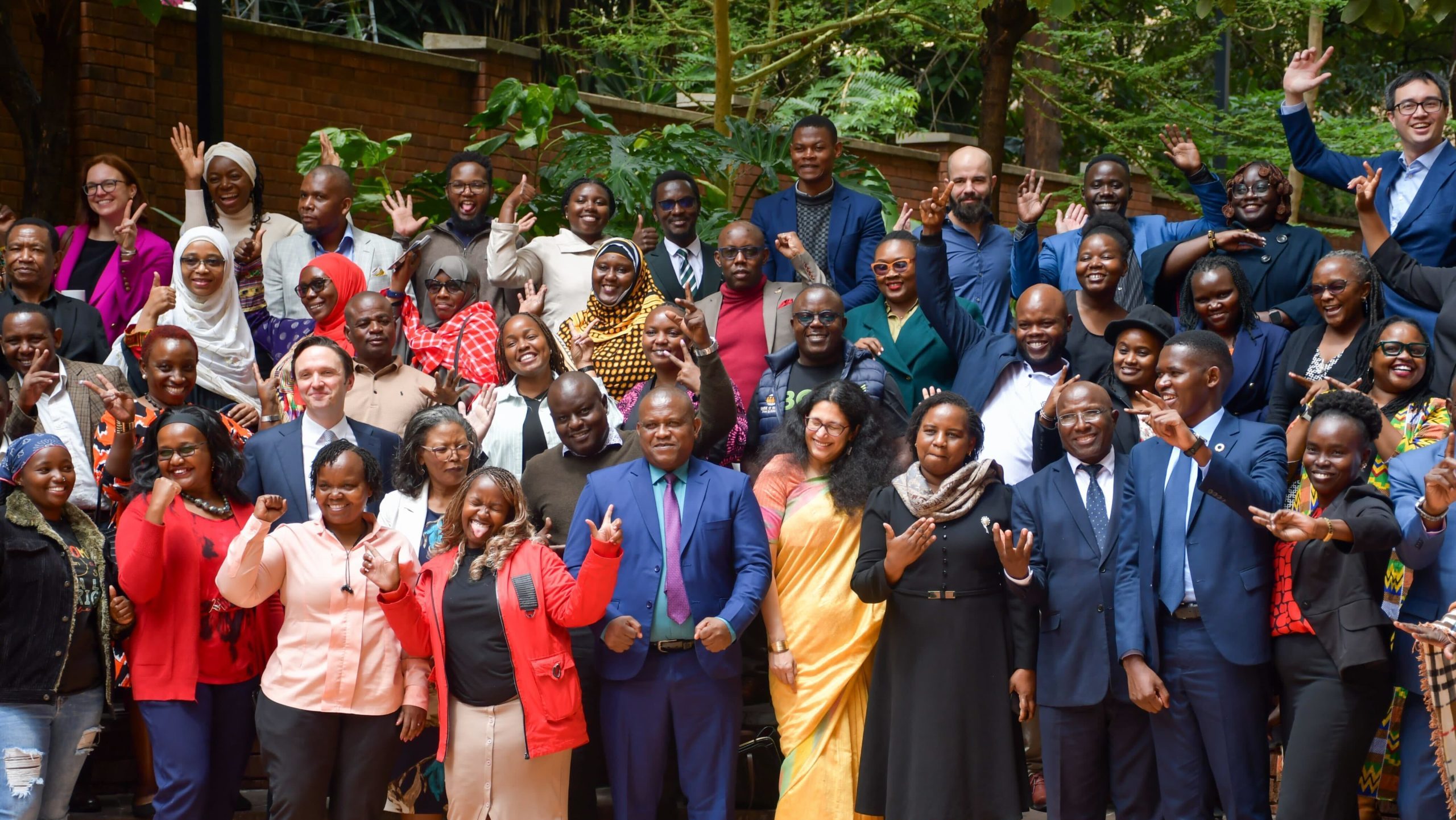
On Friday, 27 February, MCLD Kenya and the Aga Khan Foundation hosted the launch of Community-Led in Practice: We Power Our Own Change, published by Routledge. The volume brings together contributions from over 30 practitioners, academics, NGO leaders, and community leaders from across the globe, offering practical guidance on centering communities as agents of their own change. The launch was more than a celebration of a book. It was a demonstration of the very argument the book makes.
The event opened with a welcome from Dr. Hesbon Owilla, followed by context setting from Rose Mbone, who grounded the morning in a simple but powerful observation: communities have always had the capacity to drive their own change. What has too often been missing is not the will or the knowledge, but the recognition. Rose framed the book and the gathering as a step towards that recognition.
The keynote address was delivered by H.E. Lucy Mulili, Deputy Governor of Makueni, who represented the Governor and set a strong political tone for the conversation that followed.
The official book launch and panel, moderated by Catherine Mwendwa (Giving Tuesday), brought together Gunjan Veda (MCLD) and Matt Reeves (the Aga Khan Foundation) to explore why the book was written, why community-led development matters, and what it means to share its impact more broadly. The panel was complemented by video contributions and a chapter reading that grounded the discussion in the lived experience of communities.
Following a tea break, the symposium on Reflections and Perspectives, moderated by Jane Anyango, gave the floor to community practitioners. Hashim Ndoro, working in Ribe, Kilifi County, shared how the Ribe Community Initiative has advanced locally driven solutions in water access, education, climate resilience, and gender inclusion by working closely with communities to identify their own priorities. Lucas Cosmas Fondo, who co-created the Amidzi Empowerment CBO in Majaoni Village, Mombasa, spoke about mobilising communities to protect and restore coastal ecosystems through mangrove restoration, improving livelihoods for communities that depend on marine resources. Evalyne spoke about her work with persons with disabilities, making the case that community-led development is only meaningful if it reaches those who are most often left out of both the planning and the benefits. Patrick spoke about the role of civil society in Makueni, describing how CSOs work together as a unit to educate communities about their rights and how to engage effectively with county government. Clinton reflected on the broader landscape of community organising, drawing on examples of how communities have mobilised resources and leadership from within when external support was absent or unreliable.
A thread running through all the presentations challenged conventional development logic. When communities come together, they rarely need external funding for direct project implementation. What they need is facilitation, meaning space to meet, develop a shared strategy, and identify the projects that matter to them. Because communities have ownership of these projects, they require significantly less external funding than conventionally managed projects and produce more sustainable outcomes.
This was given powerful political weight by H.E. Lucy Mulili, who reflected that what surprised her most as a politician was how informed the communities in Makueni were. When communities know what they are entitled to, she noted, you have no option but to deliver. Matt added that investing in a community is never a wrong decision. It may take longer than expected, but the results will always come.
The morning closed with buzz groups and opportunity mapping. Most participants worked across Kenya, spanning counties from the coast to the rift valley and arid and semi-arid regions. The conversations surfaced a consistent picture. Participants identified their greatest opportunities as the growing momentum behind devolution, which has brought decision-making closer to communities, the increasing willingness of some funders to support locally led approaches, and the strength of existing community networks that have demonstrated resilience without significant external support. The threats they named were equally consistent: shrinking civic space, the continued tendency of external actors to bypass local structures in favour of speed and visibility, funding that comes with conditions that undermine community ownership, and the risk that community-led development becomes a label adopted by organisations that do not practise it. Participants used the opportunity mapping exercise to identify who is working where across Kenya and to begin building connections across geographies and sectors. Closing remarks were delivered by Kennedy.
The event was a reminder that the evidence for community-led development is not abstract. It is sitting in Ribe, in Majaoni, Kakamega, and in Makueni, waiting for the rest of the sector to catch up.