
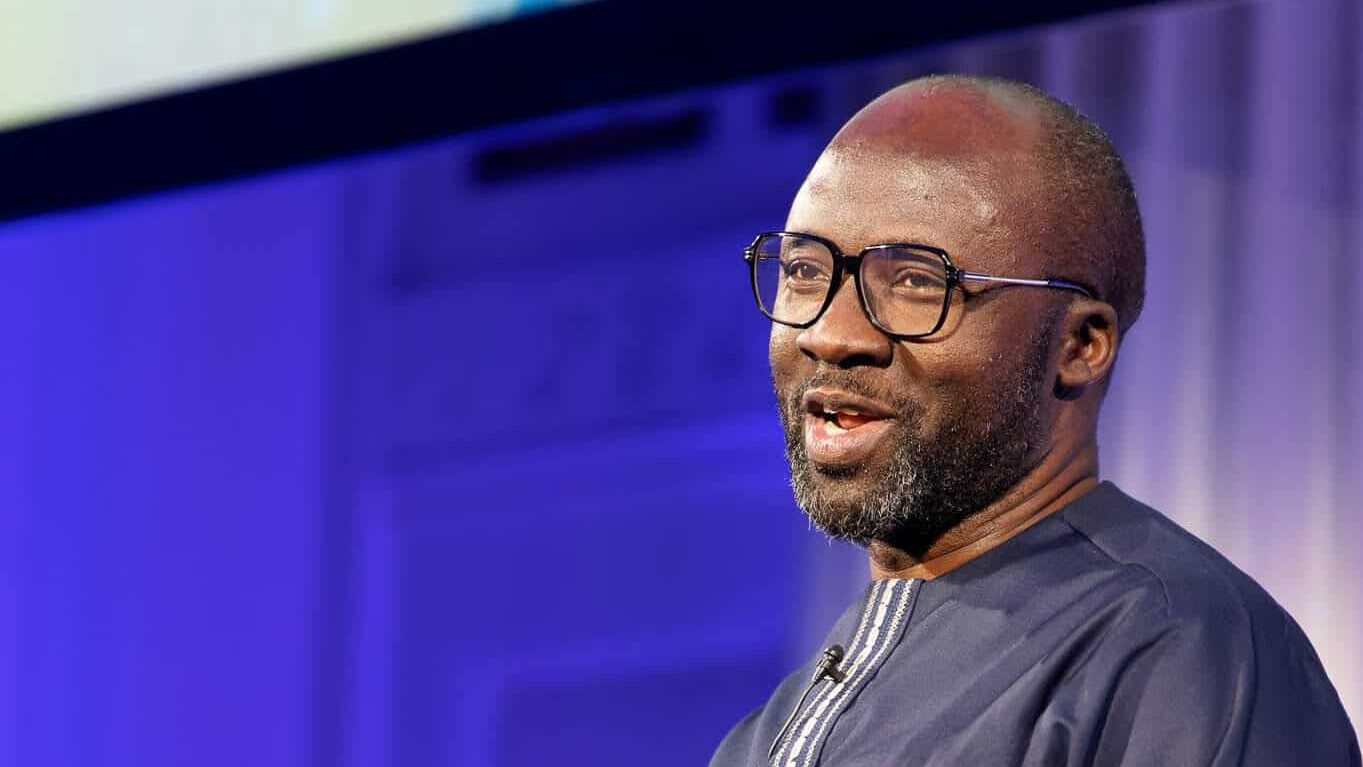
For the past decade, MCLD’s work has been shaped by incredible people. Voices of the Decade is a new interview series featuring the leaders, partners, and changemakers who helped build our community. Their answers are human, thoughtful, and an encouraging reminder of MCLD’s impact. This second interview features Rowlands Kaotcha, President and CEO of The Hunger Project.
Rowlands Kaotcha – MCLD from 2015 to 2025
Rowlands, you wear multiple hats as far as MCLD is concerned. You were there when MCLD was first launched in Malawi – you were the first national and subsequently regional coordinator for MCLD, and currently, as President and CEO of The Hunger Project, you represent MCLD’s strongest partner. Can you tell us what MCLD means to you?
It’s like watching and being part of a dream being manifested. The key thing for me is centering the real heroes when we speak about development. In 2015, when we started the conversation partly in Malawi, the question was, yes, we’re talking of leaving no one behind, of localization of SDGs, of communities leading the work, but what’s our shared understanding about all this, and how are we ensuring that our way of being as development practitioners is truly living this practice and leading with the mindset of communities at the center of development?
10 years on, seeing MCLD as a global movement with thousands of civil society organizations, this is the real image of people leading the way, living CLD, and developing a practice out of it. It’s a big thing; ensuring the language is right is a big thing. Context is born out of language, and context creates the space in which actions take place.
For The Hunger Project, this is who we are; it’s our way of being. It’s a huge pride to be part of what is being manifested with the Movement for Community-Led Development, to see that it has created a platform at international levels, international dialogues with big funders, to reframe the conversation and create a new type of relationship between civil society and communities.
One thing I love most about MCLD is that it’s not about the ego of a label or an organization. When you interact and you are in the space of the Movement for Community-led Development, you realize for the first time that labels of civil society drop completely. You realize that the key agenda is community leadership, and how that is influencing development, how that is influencing the relationship between funders and partners on the ground, and how that is influencing conversations at the international level. It takes away our labels as institutions. It centers on the real thing, which is community leadership.
What are you most proud of accomplishing in Malawi or Southern Africa with MCLD?
First, when our journey in Malawi led us to ask, ‘Is it about us four [starting institutions] or about the issue and who does that issue demand to be on the table?’
That was a big moment, and it was tough because sometimes we have picked partners based on who speaks our language, who looks like us, not who the issue wants or needs to be here on this table. We realized we’re not having a conversation about resources; we are having a leadership conversation for a new context of community development.
We started talking to individuals, and there were so many questions: who will be financing this, where will the money come from, what will it look like, and who will lead it? We’d say we don’t know, so why don’t we allow it to create itself? Perhaps the question should be, what type of leadership or structure does this issue need?
When we launched in Malawi, it was a really big moment. Then, when MCLD was spinning out of The Hunger Project, it was another huge moment because it validated the fact that the idea, the context, is big and should not be limited by a label of a particular institution. To me, it felt like allowing the idea to flourish, and guess what, The Hunger Project is just in 13 program countries and a few other countries where we concentrate on fundraising and education, and look at MCLD now, it’s completely far beyond where The Hunger Project exists. And so at that moment, I felt like, yes, that rebirth is happening, allowing the idea to go out of the cocoon so that it is not limited by a particular institution. That was a pivotal moment.
The Hunger Project incubated MCLD and has remained one of our strongest partners since our shift to becoming our own entity. Why does The Hunger Project believe so strongly in and continue to support MCLD?
We continue to support MCLD in many different forms, including financial, because we strongly believe in community leadership as the center of everything that we do.
If NGOs could end world hunger, world hunger would have ended by now. If money could end world hunger, world hunger would have ended right now. We need something else. That something else we need is an awareness to say, ‘there is a leadership out there we are not allowing to manifest.’
During the time of COVID, NGOs withdrew, partners withdrew, and that leadership managed the crisis on the ground, most of it undocumented because we never saw it, and they bounced back. What would happen when that leadership is truly allowed to manifest and we partner with it differently, not as passive recipients, but active owners, leaders of development, not as beneficiaries, but partners, and are central in what we do on the ground? At The Hunger Project, we strongly believe in that, that’s who we are.
It’s also the context that the Movement for Community-led Development is creating. The context of community leadership. That context is enabling choices. For The Hunger Project, we strongly believe in context creation: create a context for the end of hunger, create a context for women leaders to flourish, and create a context because it affects the type of choices and the possibilities people have. And so that resonates powerfully with us as The Hunger Project.
One thing we loved to see was MCLD wrestling with its design and structure, not just going for the obvious. There are so many ways we structure ourselves, and we quickly default into what’s already done. We really loved seeing MCLD spend time to come up with a design, and that process was not being done in Washington. It was a process that allowed everyone to be part of the co-creation of the true design that delivers our vision and mission, and allows everybody to be there, and not saying ‘Global South just wait, we design it here and we’ll send it to you,’ or ‘let’s just create a hierarchy.’ We loved to see that process and what emerged from that process. It’s great to see MCLD living its values, and those are also our values at The Hunger Project, so we love to see the manifestation of those values.
Our sector has changed a lot since MCLD launched, and we can unpack that as well, but through all those changes, what gives you hope for the future of CLD?
I know it’s tough to talk about hope in a moment where we are now, where the funding landscape is completely changing, and global relationships are being challenged. And yet, when you look at the Movement for Community-led Development, it’s a huge opportunity to have in this moment. In every disruption, there is an invitation to a conversation we would not have before. For us to have that conversation, we need to have a completely different mindset, and I see the Movement for Community-led Development as a container for such a conversation.
Imagine thousands of those civil society organizations and individuals together having a conversation. What are we seeing in this disruption? What are the opportunities in this disruption? What is our new way of being in this disruption? Now, that conversation is possible because this container was founded on the basis of an idea, not on the basis of money. It was founded based on community leadership.
MCLD is uniquely placed for conversations in this moment, which are not driven by whose agenda or who brings more money; they are driven more by the central issue we are addressing here. How will we allow community leadership to continue flourishing in this new context that we have? When new things start emerging, the Movement for Community-led Development is strategically positioned to influence those new emerging models and processes, so that those models do not go back and default into the same way things used to be done before.
I strongly feel the new is emerging right now. You need credibility to drive such a conversation, and MCLD provides that container because it has a wide membership across the world to provide credible spaces for such a conversation.
On that note of hope, I’d like to close by hearing what message you would like to share with MCLD’s 3000+ members about how to lead boldly and locally as we enter our next decade.
The first 10 years were really about creating the context, creating a framework, creating alignment, creating understanding, and creating a critical mass. One of our biggest roles in the next decade is to leverage that critical mass, to leverage that clarity of the centrality of community leadership. It’s also gunning against the re-emergence of more of the same, which is being disrupted right now.
How do we be bold enough to play that role? And how do we ensure that our design remains relevant to deliver the mission as this new is emerging, so that the new does not destroy the founding design of MCLD? What new funding models are emerging? How are we influencing them? How do we make sure that the conversation is about sustainability and transformation in communities? My advice is be bold, keep that design and influence, because these patterns of disruption → re-emergence → disruption → re-emergence will continue.
Featured Photo Credit: The Hunger Project, 2023