
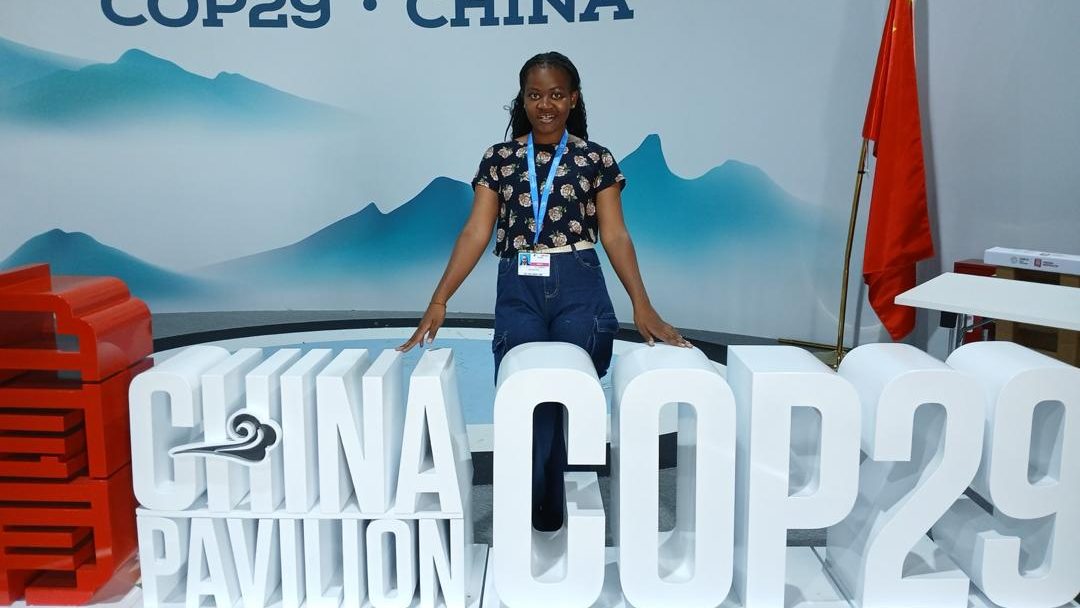
For the past decade, MCLD’s work has been shaped by incredible people. Voices of the Decade is a new interview series featuring the leaders, partners, and changemakers who helped build our community. Their answers are human, thoughtful, and an encouraging reminder of MCLD’s impact. In this interview, Akuzike Phiri, a climate activist from Malawi, shares about how the youth of MCLD can influence policy and her hope for more regional exchanges. Akuzike represents MCLD’s Youth Task Force, part of MCLD’s commitment to ensuring youth have a voice in our work.
Akuzike Phiri – Youth Are Building Their Own Seat at the Table
How do you see youth in Malawi leading responses to global development issues?
Youth are willing and eager to drive development, but lack the space to do so. We play a vital role in advancing global development initiatives, yet in my country, they are rarely given meaningful opportunities to participate in decision-making. Many of us contribute by supporting government leaders with local initiatives, but it becomes harder to have representation on the national or global stage.
Looking back, what moments or experiences shaped your path into climate activism?
My journey as a climate activist began when I served as a G17 Climate Youth Advocate in 2024, representing the youth of Mzuzu University. This role introduced me to climate advocacy and strengthened my commitment to advancing youth participation in sustainable development.
I became passionate about mobilizing young people and turning environmental awareness into practical action during my undergraduate studies when I joined Go Green Save the Environment, an initiative focused on waste management and environmental sustainability. I later became one of the leaders of the Mzuzu chapter, where I helped coordinate community clean-ups, awareness campaigns, and student engagement on responsible waste practices.
I also served on the National Youth Network on Climate Change in Malawi, contributing to national-level advocacy and policy discussions aimed at amplifying youth voices.
My activism is grounded in real-life experiences. I have worked closely with local farmers in Malawi, learning directly how climate change is affecting their livelihoods through unpredictable rainfall patterns, prolonged droughts, and reduced agricultural productivity. My engagement with them has shaped my understanding of climate justice and the importance of locally driven solutions.
I am now committed to inclusive, cross-cultural approaches to climate action that connect grassroots realities with global policy efforts.
Your journey didn’t stop at community work—it carried you onto the global stage. What was your experience at COP29 like?
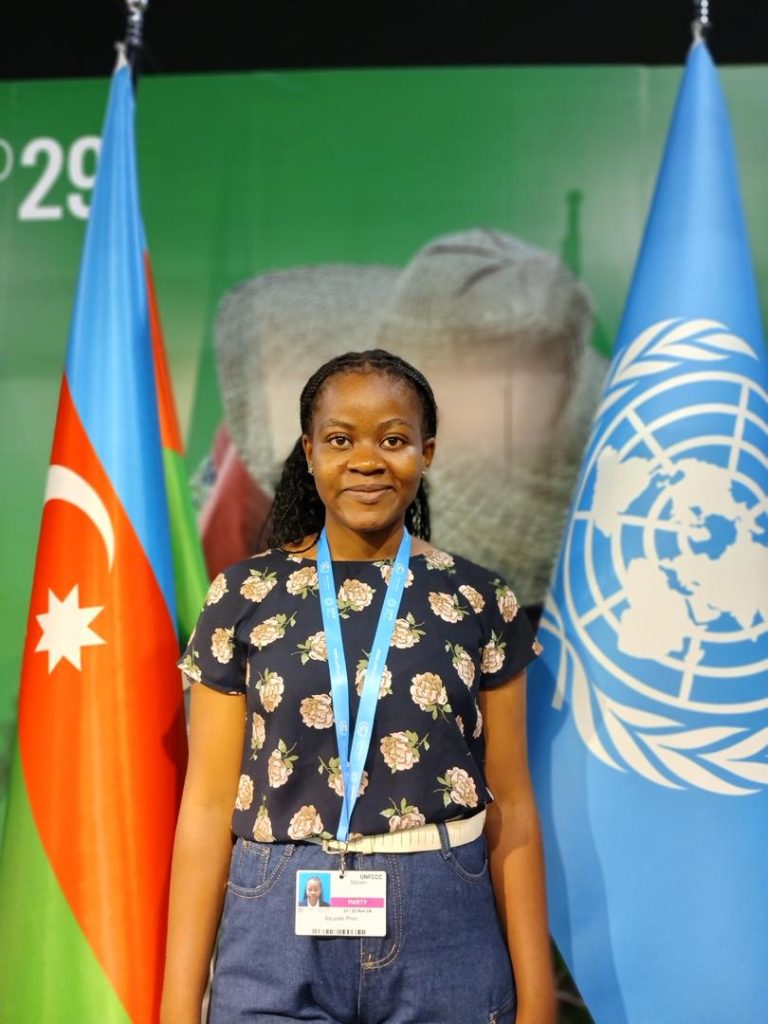
Attending COP29 in Baku, Azerbaijan, was a significant milestone in my journey. It allowed me to engage with delegates, youth representatives, and policymakers from around the world, while bringing perspectives from Malawi and the Majority World into global discussions. I contributed to conversations on climate governance, adaptation, and youth inclusion, sharing insights from my experiences in Malawi.
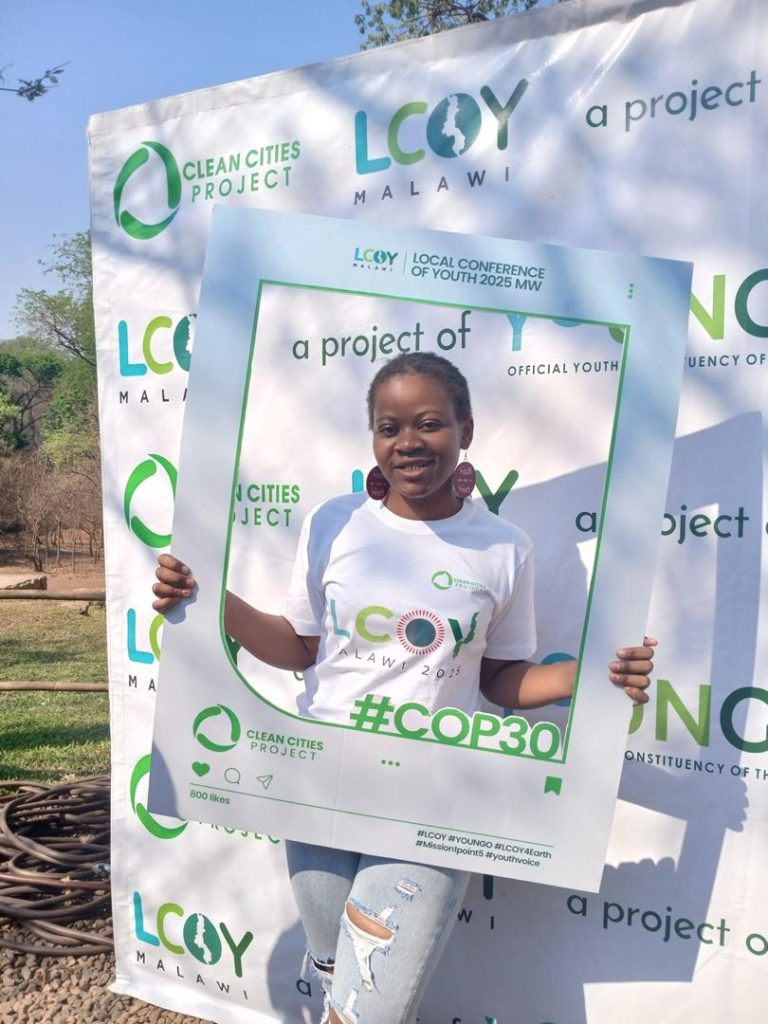
Building on this experience, I was later invited to speak at COY16 (Conference of Youth) 2025, where I focused on the real-life impacts of climate change on vulnerable communities and the urgent need to bridge global policy with local realities. This platform allowed me not only to share my experiences but also to connect with and inspire other young climate leaders.
Why did you join MCLD’s Youth Task Force, and how do you see MCLD removing barriers to youth having a voice in development?
I joined the Youth Task Force because MCLD brings together people we can learn from and grow with. It is a place where I can build valuable connections and learn from other professionals. For example, I have a Bachelor’s degree in International Development, and Yewo [Gondwe, MCLD Southern Africa Coordinator] has a Master’s in International Development and Diplomacy. The Youth Task Force gives us solidarity where we come together as equals, regardless of our titles. It has supported me not only professionally, but also socially and personally. I see it as a platform that both challenges and unites us.
MCLD champions inclusivity. We, as youth, don’t want the international development space to wait for us, and MCLD is ensuring that youth are represented in the Youth Task Force, where we can bring all of our voices together.
What initiatives do you hope to see the Youth Task Force start, or build on?
I have benefited greatly from the recent Chess Fellowship, a program designed to build strategic thinking and cross-country connections among members. Before joining, I had very limited knowledge of chess, but through the fellowship, I learned how to play and also developed skills like strategic thinking, patience, and decision-making. Beyond the game itself, the experience taught me the value of community learning. Platforms like MCLD bring people together from different backgrounds to share knowledge, support each other, and grow collectively. This has influenced how I approach leadership and collaboration in my climate work.
Looking ahead, I would love to see more opportunities like this, as well as exchange opportunities with members from other regions like Latin America and the Caribbean (LAC). These connections would allow us to learn from each other’s work, share policy ideas, and strengthen our collective impact.
What message do you have for young people about their power to shape their communities?
Let’s take a chance, let’s be bold. We, the youth, are the future. Join hands with others, raise issues you see, and join MCLD to have a voice in solving them. Spaces like MCLD show that when youth come together, their voices can grow stronger and reach further.
About Akuzike: MCLD Youth Task Force Member
Akuzike Phiri is currently a Solidarity Exchange for Environment and Development (SEED) Exchange Fellow between Malawi and Norway under Point of Progress. She serves as the board member of the Ultimate Leadership and Integral Mindset Change Institute. Akuzike has also held the position of International Head of Branches for the Youth Alliance for Leadership Development in Africa and as a member of the National Youth Network on Climate Change. She has represented Malawian youth as a party delegate of the Conference of the Parties on Climate Change (29) in Baku, Azerbaijan, and recently spoke at the Norwegian Climate Festival. During her studies, she conducted research on factors that impede the implementation of the United Nations framework on climate change. Akuzike has a Bachelor’s degree in International Relations and Diplomacy.