
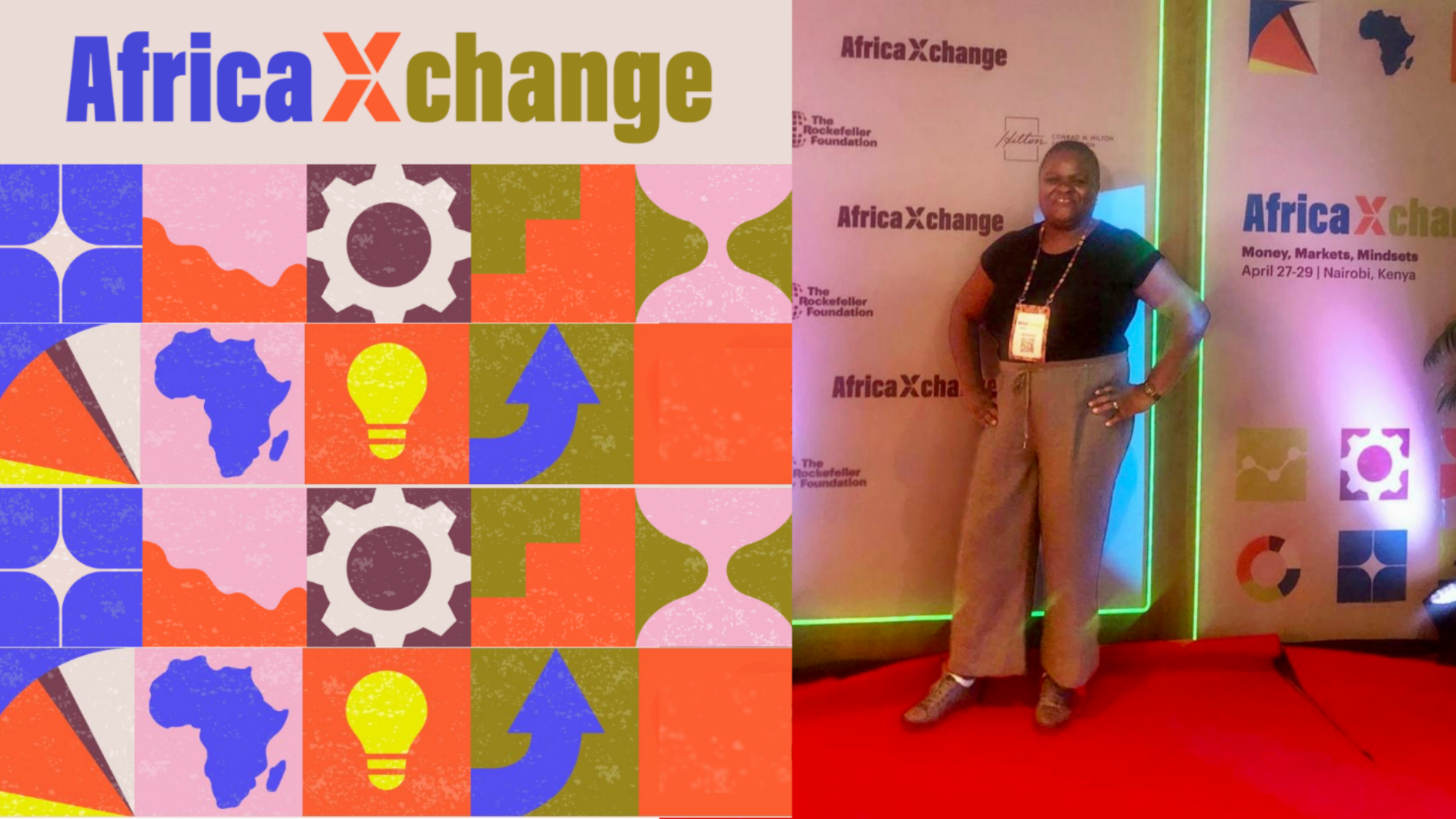
Reflection by Cathy Amenya, MCLD Programs and Partnerships Manager
In April, MCLD joined AfricaXchange 2026, an annual gathering hosted by The Rockefeller Foundation and Conrad N. Hilton Foundation. The conference brought together funders, civil society leaders, and philanthropies to discuss how development finance is structured, who controls it, and how to centre African voices in conversations around funding.
This reflection examines some of the conference’s most urgent themes, from where and how development finance decisions are made to execution gaps and the growing call for Africa to define and finance its own future rather than respond to external priorities.
The Mobilisation Crisis
The call at AfricaXchange was clear: Africa’s challenge is not only limited capital, but also weak systems for coordinating and deploying it. Participants and speakers noted that as long as African markets remain fragmented and isolated, with slow approvals and broken systems connecting process to development, capital will either bypass them or arrive on terms that remove local control.
One participant described a case where funding was allocated to an African country and remained unused for six months, leading the investor to withdraw its commitment. This was not framed as an African failure, but a shortcoming of the current development finance system.
The Structure of Global Development Finance
A recurring theme across AfricaXchange was that the architecture and narratives shaping global development finance were designed without African participation.
As a result, African countries are consistently positioned as places where risk needs to be managed rather than places where partnership can be built.
Discussions proposed three shifts to move the needle towards coordination over fragmentation:
- Equal partnerships with shared risk
- Financial service integration across Africa
- Prioritising local leadership over international intermediaries.
From Intent to Action
Much of the development finance conversation is focused on identifying what is wrong – fragmented markets, disconnected systems, extractive financing architecture, policies designed without communities. The diagnosis is usually accurate. What happens far less often is an honest reckoning with what Africa can do about it now, from within its existing resources and systems, without waiting for external conditions to change.
Deceptively simple questions shaped discussions: how do we drive intent to action? Do we have capital on execution? What can we change? What is within our reach?
The phrase “capital on execution” is worth pausing on. Participants and speakers used it to describe the full package needed to deliver programs successfully: organisational capacity, coordination systems, technical skills, governance structures, and the willingness to be accountable for outcomes.
African countries have repeatedly demonstrated that they can attract financing commitments and produce well-written strategies. Instead, the gaps we most often see are in execution, not because the capacity does not exist, but because it is not organised, not invested in, and not treated as the serious infrastructure problem that it is.
Discussions also challenged a common framing of development policy, which is that progress depends on external intervention. Too much of the conversation about African development is structured around what Africa needs from outside. That matters, but it can also become a way of deferring action while the things actually within African control remain unaddressed.
At AfricaXchange, we identified the following examples of domestic capacity that go underutilised:
- Young graduates not being deployed into public systems.
- Pension funds not financing African infrastructure.
- Community organisations managing resources for decades without formal recognition.
- Legislators who could change the regulatory environment but have rarely been engaged seriously on these questions.
None of these requires a new international agreement. They require political will, coordination, and the capacity to execute.
The honest question underneath all of this is one of confidence and habit. Africa has spent decades in an architecture that positioned it as the recipient of external decisions. Governments, civil society, and institutions often still operate within that framework. The mindset shift from asking ‘what do we need?’ to ‘what can we do?’ is harder than it sounds.
Domestic Financing: Pension Funds and Beyond
African pension funds hold significant assets, yet are largely invested outside the continent or in instruments that do not directly finance African infrastructure and development.
Participants proposed systems to access and direct pension funds back to African countries for infrastructure investment. African development must be financed from within, and this is a form of domestic financing that puts the decision-making about capital deployment in African hands. External financing, however well-intentioned, comes with conditions and timelines set by others.
Governance and Public Systems
Conference discussions highlighted gaps between planning and budgeting processes in many African governments. Without their integration, even well-designed programmes get starved of resources. In some contexts, 70% of available financing goes unutilised – this is not a funding problem but a systems one.
A head of policy raised the intergenerational debt question using a Kenyan example: a social protection programme directing cash transfers to older citizens, financed through borrowing repayable over twenty years. This financing structure is concerning – future taxpayers will repay debts that they did not participate in. In twenty years, those who received the transfers will, in most cases, no longer be alive. Governments must design policies with the next generation in mind.
Participants proposed the following reforms:
- Investment in leadership and coordination capacity, and integrating them in public administration schools.
- Training public servants in citizen-focused service delivery
- Creating systems to map young graduates based on their skills
- Engaging legislators who shape the enabling environment for everything else.
Notably, corruption was absent from formal discussions at the conference, despite its relevance to questions about where money goes and why it does not reach its destination.
Community and Policy Design
Governments frequently impose policies without consulting communities, particularly during crises.
The Kenyan Movement Shining Hope for Communities (SHOFCO) described their work in Kibera, Kenya, during COVID-19. Government guidance encouraged residents to stay indoors, wash their hands regularly, and maintain physical distancing. SHOFCO representatives argued that these recommendations ignored living conditions in Kibera, where multiple people share one room, running water is unreliable, and staying indoors means losing income. SHOFCO adapted the response by designing responses around community realities, including installing handwashing stations.
The discussion raised a broader question that remained unresolved: can communities genuinely influence national policy?
Narrative and Self-representation
How does Africa communicate about itself? What stories are being told, who is telling them, and what is the impact of those narratives? Portrayals of Africa as dependent or untrustworthy reinforce funders’ assumptions about needing to control decisions. Narratives affect funding decisions.
Wikipedia was cited as an example of unequal representation. Many areas of African history, knowledge, and contemporary life are absent from the world’s most widely used reference system. This can be changed by Africans themselves. Speakers also noted that May 25th, Africa Day, is a significantly underused opportunity. African civil society and creatives must be proactive and find ways to shape public narratives about the continent.
We left the conference with a call to turn rigidity into credibility: to examine how Africa presents itself and find ways to prepare for the change it wants to see.
The Role of Civil Society
Civil society has a unique role in bridging the gap among the political, technical, and private sectors when it comes to markets. It has the relationships and knowledge to carry community perspectives into spaces where decisions are made.
At AfricaXchange, we asked whether civil society should use its position to translate decisions downward after they are finalised or to bring community knowledge upward before decisions are made.
Reform without mindset shifts is unsustainable. Structural changes to markets, financing systems, and governance architecture will fail if the people operating them continue to view communities as passive recipients rather than decision-makers.
Looking Ahead
We left AfricaXchange motivated by fellow participants who echo the need to move away from talk to real action, the ways that civil society must be involved, and the ownership required to make the changes we talk about a reality. The future that many participants describe already exists across the continent. Now, can we build the systems, confidence, and coordination to scale it?
Feautured Photo Graphic Credit: AfricaXchange