
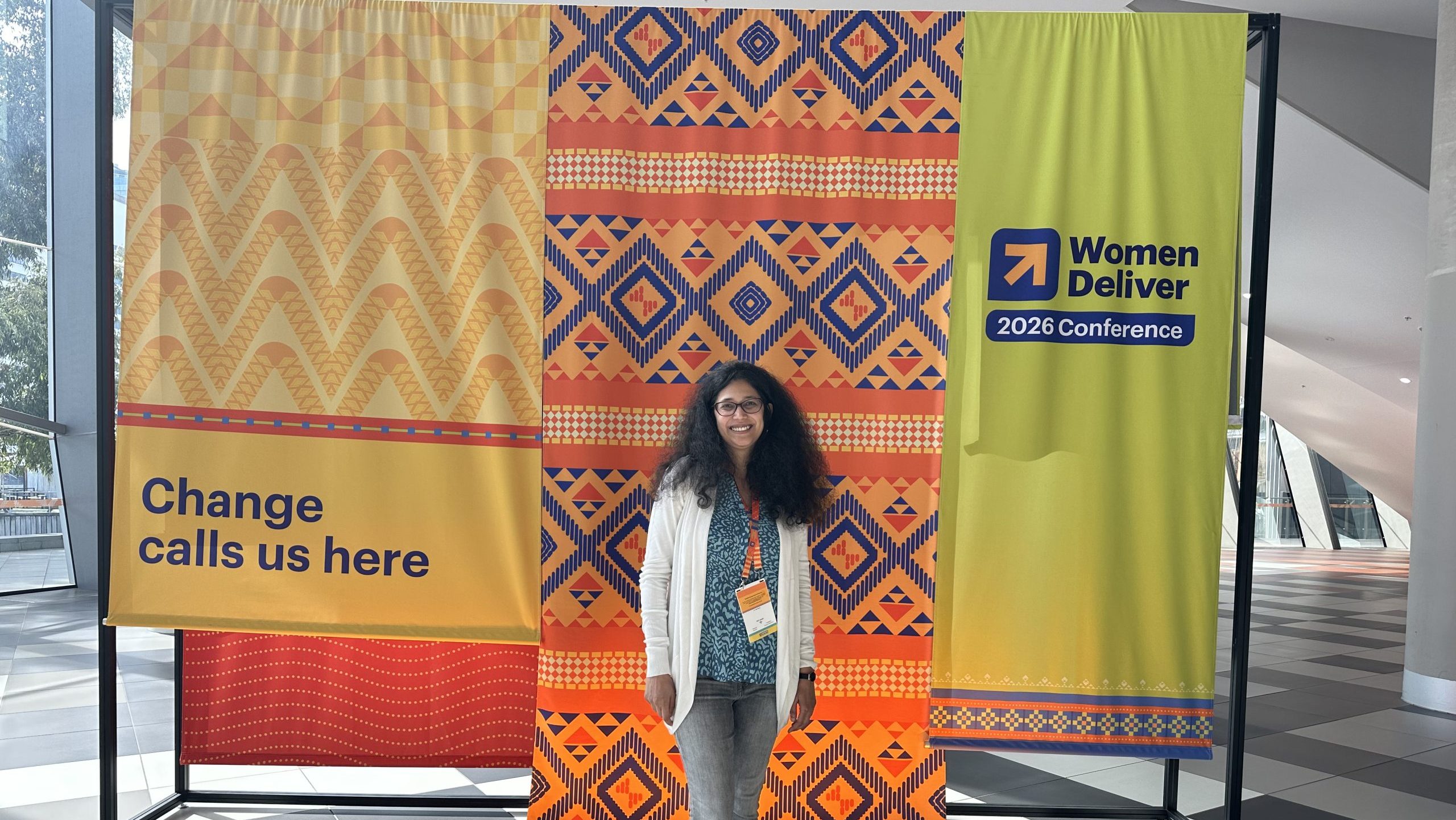
Reflections by Gunjan Veda, MCLD Global Secretary
It has been a month since Women Deliver (WD), the biggest gathering of feminists from around the world, took place in Naarm (Melbourne). This four-day celebration of feminism – it feels somehow wrong to reduce it to a mere conference – was bustling with energy, ideas and most importantly, care. And at the end of it all, it adopted the Melbourne Declaration, a document shaped by over 650 voices across the globe that describes their vision for gender equality and calls for building an ecosystem based on “care, accountability, and justice.” More on this later.
What set Women Deliver apart was not simply the scale of participation or the diversity of voices, but its unwavering conviction in the possibility of another world.
Feminism as Political Practice
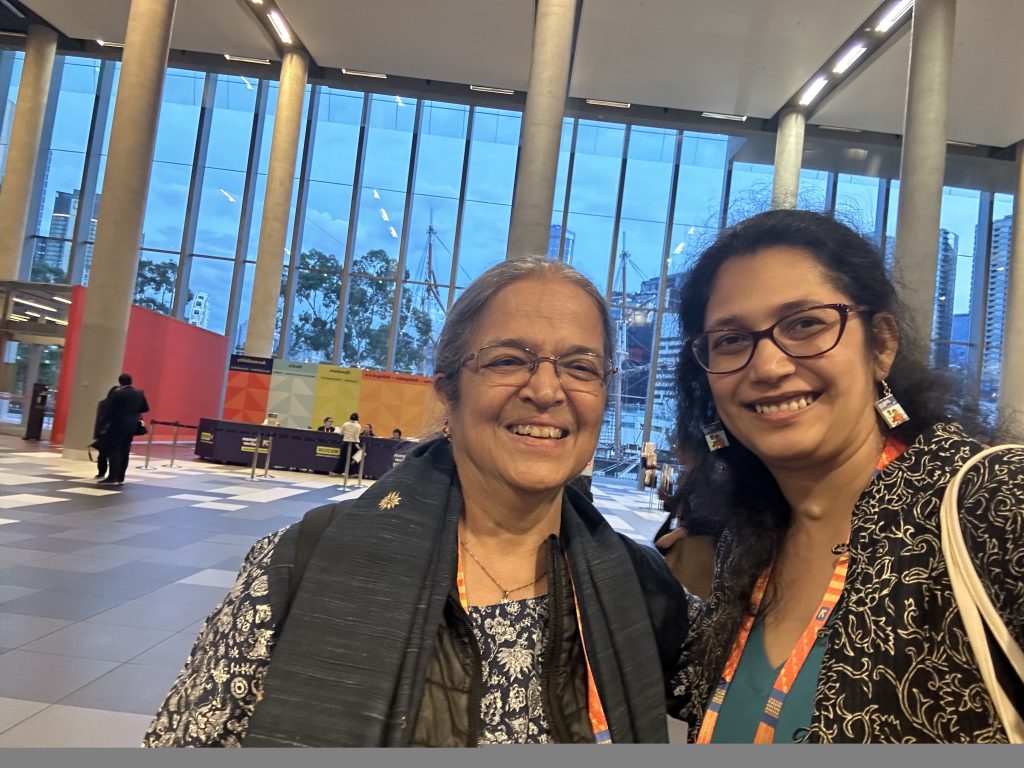
Connections and meeting colleagues, old and new, are the highlight of most conferences (I experienced it at the Skoll World Forum just the week before WD), but what sets Women Deliver apart is the candor, the feeling of sisterhood, and the unwavering conviction in the possibility of another world. Here, war, genocide, complicity in crimes against humanity, pushback against human rights and gender justice, and ongoing struggles of indigenous communities are not frustrations murmured in corridors and coffee shops, they are conversations on the mainstage.
This was not a technocratic event, or as the Hon. Feleti Teo, Prime Minister of Tuvalu noted, “not another gathering of good intentions,” but a political space where 6123 feminists – women, LGBTQI, men, youth, elders, people with disabilities – from 189 countries, addressed questions of power front and centre. Because, as Teo reminded us, “taking care of one another, of neighbours and communities, of land, oceans and planet, is not a sentimental language. It is a political principle.”
That political clarity was visible across the conference. One strand examined the future of multilateralism through sessions that sought to demystify UN systems and architecture. Activists like Gita Sen reminded participants that “when a system becomes this unequal and unjust, rule of law becomes a system through which injustice is perpetuated.” Discussions ranged from inequities exposed during COVID-19 vaccine access to calls for structural reform of the United Nations itself. Helen Clark, the former Prime Minister of New Zealand, advocated for invoking Article 109 to review the UN Charter, noting that the institution was created in a world that could not yet imagine the climate crises we now face.
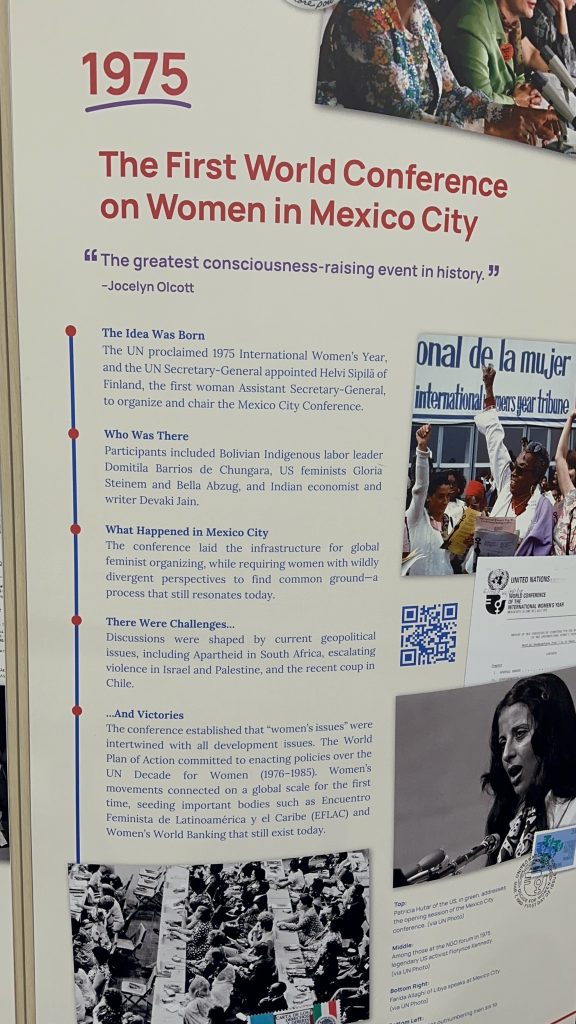
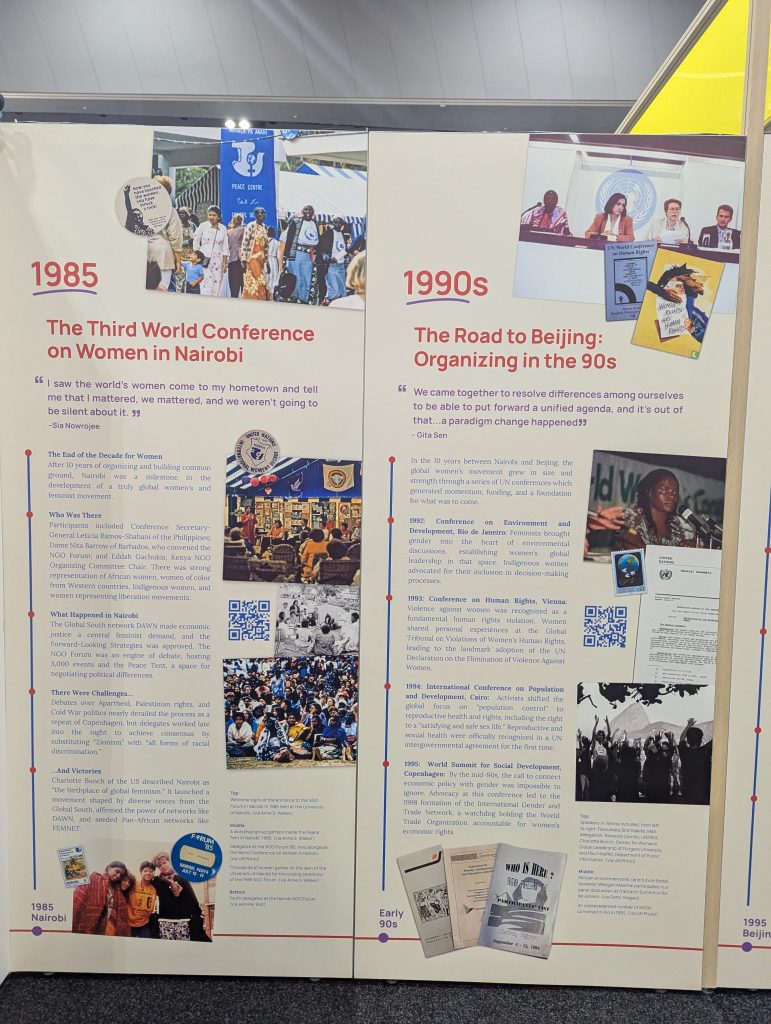
At the same time, the conference also reflected on the history and possibilities of feminist organizing within multilateral systems. The UN Foundation documented the long arc of feminist advocacy at the UN, culminating in the 1995 Beijing Declaration and Platform for Action. As Amina Mohammed, Deputy Secretary General of the UN, noted, “Cairo and Beijing were won by the ambition of civil society.”
Again and again, participants returned to the same question: what would systems look like if they were truly shaped by communities rather than imposed upon them? Because as Stephanie Harvey from Community First Development observed, “Colonization hasn’t ended. It has moved from the violence of frontier wars to systematic and entrenched systems that don’t create space for us to thrive. We have the solutions in our hands; we need support for that.”
Care as Infrastructure
One of the most striking aspects of Women Deliver was the way care itself was treated not as an afterthought, but as infrastructure.
There was an entire Care Pavilion, albeit far away from the venue, discussing how care is political and is about survival. As Sam Mostyn, the Governor General of Australia, reminded participants, “Care is not soft…it is hard to do care continuously. Care is rigorous and accountable.”
At the very outset, Aunty Di (Aunty Diane Kerr), a Wurundjeri Woi-wurrung Elder welcomed participants onto the ancestral lands of her people, grounding the gathering in Indigenous histories and practices. Throughout the conference, First Nations wisdom and traditions were woven into the program, offering not just symbolism but alternative visions of community and coexistence.
Amidst the joyful chaos, the uninhibited calling out of capitalism, the priceless coming together of wisdom born of lived experience and countless battles, the Baggarrook Bilk Gathering Hub in the centre of the exhibition hall, offered a space to rest, to be. For four days, it provided weary activists with healing. There were documentaries and tough conversations – I learnt about the violence in West Papua for the first time – but there was also dancing and music and meditation and basket weaving. A space to not just nurture your mind, but to engage your limbs (I made my first pair of earrings!), and fill your heart amongst the relentless and sometimes overwhelming volley of sessions, ideas, and conversations. I went there at least twice a day to recuperate and bask in the wisdom of the many indigenous communities from the Asia Pacific region who shared their culture of community, care and continuous struggle with all participants.
Care also appeared in quieter but equally important ways: childcare, simultaneous translation, sensory rooms, prayer and rest spaces, yoga sessions, accessible information kits, and menus designed for diverse dietary needs. These details mattered. In 2024, MCLD, alongside CIVICUS and Peace Direct, helped facilitate a Majority World guide on hosting inclusive events. Women Deliver demonstrated what such principles can look like in practice.
Reimagining Systems Through Collective Learning
Alongside the political conversations and spaces of care were countless sessions on economic justice, grassroots organizing, bodily autonomy, feminist health systems, climate justice, and funding feminist futures. Adolescents and youth were present in large numbers, sharing their stories of change, moving their bodies (every good conference has space for dancing!) and building new visions in the youth zone.
In the Climate zone, discussions focused not only on policy, but on lived realities: the impact of heat on women’s health, locally led climate action, feminist approaches to COP31, and the need to rethink climate finance and labour systems. What stood out was not simply who spoke, but who listened. Representatives from the Australian government working on COP attended many of these sessions, listening rather than occupying stage space.
What emerged from Women Deliver 2026 was collective learning — and a growing recognition that another way of organizing systems and power is possible.
That spirit is reflected in the two key documents that emerged from the gathering: The Melbourne Declaration and the First Nations, Indigenous Women’s Statement. The Melbourne Declaration calls for rebalancing the current ecosystem toward communities and civil society while reaffirming states’ responsibility to uphold human rights and gender justice. The Indigenous Women’s Statement lays out priorities, strategies, and calls to action for governments, funders, and civil society alike.
At the closing ceremony, 10 governments, many social movements, and civil society organizations committed themselves to the Melbourne Declaration. In the words of 14-year-old Vivienne Acceo, “today we choose clarity, intentionality and commitment.”
At a moment when so many systems around us are fraying, Women Deliver offered something increasingly rare: a reminder that care, community, and collective struggle are not peripheral to political change — they are what make it possible.