

By Sofía Sprechmann Sineiro
Coordinator of the Latin American Forum on Decolonizing Aid
Co-Chair of the Pledge for Change, and former Secretary General of CARE International
The international aid sector is currently consumed by conversations about shrinking budgets, donor retrenchment, and financial sustainability. Across the Global South, organizations are scrambling to respond to drastic reductions in funding from governments such as the United States, the United Kingdom, Germany, and the Netherlands.
But framing this moment primarily as a funding crisis fundamentally misses what is actually happening. What we are witnessing is not only a contraction of aid. It is a contraction of civic space, democratic possibility, and social solidarity. At the heart of this crisis lies a dangerous failure to recognize a simple but fundamental truth: Civil society is not a delivery mechanism. It is a public good. When civil society weakens, democracy weakens with it.
This reality becomes strikingly visible in Medellín, Colombia. Medellín is often internationally celebrated as a story of resilience and urban transformation. But it is also a territory profoundly shaped by armed conflict, violence, forced displacement, and long-term social fragmentation. In that context, civil society organizations — together with international cooperation — played a historic role in sustaining democratic life itself. They protected human rights, accompanied victims, supported peacebuilding processes, created alternatives for youth exposed to violence, defended communities, generated territorial knowledge, and held institutions accountable. Civil society was not peripheral to democracy in Medellín. It was one of the conditions that made democracy possible.
That is precisely why the current moment matters so much. Today, many civil society organizations face a profound paradox. Some remain operationally strong. Several still have experienced teams, institutional credibility, and relatively stable short-term finances. Yet many are questioning their long-term future and role. Why? Because what they are experiencing is not simply financial uncertainty. They are experiencing the erosion of the broader democratic and civic conditions that allow civil society to exist meaningfully.
This distinction is critical. Too often, sustainability discussions are framed as technical or managerial problems which may be solved by diversifying revenue, innovating financially, becoming more entrepreneurial, competing more effectively, and professionalizing further. But sustainability is not only economic. It is political and social. Civil society organizations cannot thrive where civic space contracts, public trust erodes, polarization intensifies, human rights are attacked, solidarity is replaced by securitization, and democratic participation weakens.
The current aid crisis therefore cannot be solved simply through new financing instruments or organizational adaptation strategies. It requires recognizing that what is at stake is the democratic fabric itself. Civil society is democratic infrastructure. Civil society organizations should not be understood as charity recipients, subcontractors or temporary project implementers. They are essential institutions that sustain democratic life as they protect rights, build participation, accompany marginalized communities, defend accountability, generate collective memory, strengthen social cohesion, and help societies imagine alternatives.
These functions cannot be reduced to project outputs or measurable deliverables. They are part of what allows societies to remain democratic. Weakening this ecosystem therefore has consequences far beyond individual organizations. Yet the dominant aid architecture often treats civil society as if it were infinitely replaceable, permanently precarious, and structurally disposable.
The current crisis did not emerge in a vacuum. For decades, international cooperation systems have often encouraged fragmentation, competition, and dependency among civil society actors through short-term project cycles, excessive compliance systems, donor-driven priorities, and concentration of resources in large intermediaries. The result is that many organizations operate in permanent precarity even while performing essential democratic functions.
Recognizing civil society as a public good changes the conversation. If civil society is understood as a public good, then the implications are profound. It means international cooperation should support ecosystems, not only isolated projects. It means reducing bureaucratic burdens that exhaust organizations while adding little democratic value. It means investing in long-term relationships, trust, collective infrastructure, and territorial autonomy. And it means recognizing that protecting civic space is not separate from development cooperation — it is one of its central purposes.
Through the Latin American Permanent Forum on Decolonizing International Cooperation, organizations across the region are articulating a different vision: a Solidarity-Based Cooperation Paradigm grounded in justice, autonomy, reciprocity, care, and redistribution of power. Importantly, it also reframes sustainability itself. Sustainability is not understood primarily as the financial survival of individual organizations. It is understood as the collective capacity of societies to sustain democratic life, solidarity, participation, and social transformation.
So, the future of civil society is a choice about democracy. We can continue moving toward a world where civic space contracts, militarization expands, solidarity weakens, and civil society becomes increasingly fragile.
Or we can recognize that democracy itself depends on protecting the organizations, movements, and relationships that sustain public life. The lesson emerging from Medellín is ultimately simple but profound: Civil society is not peripheral to democracy. It is one of the ways democracy survives.
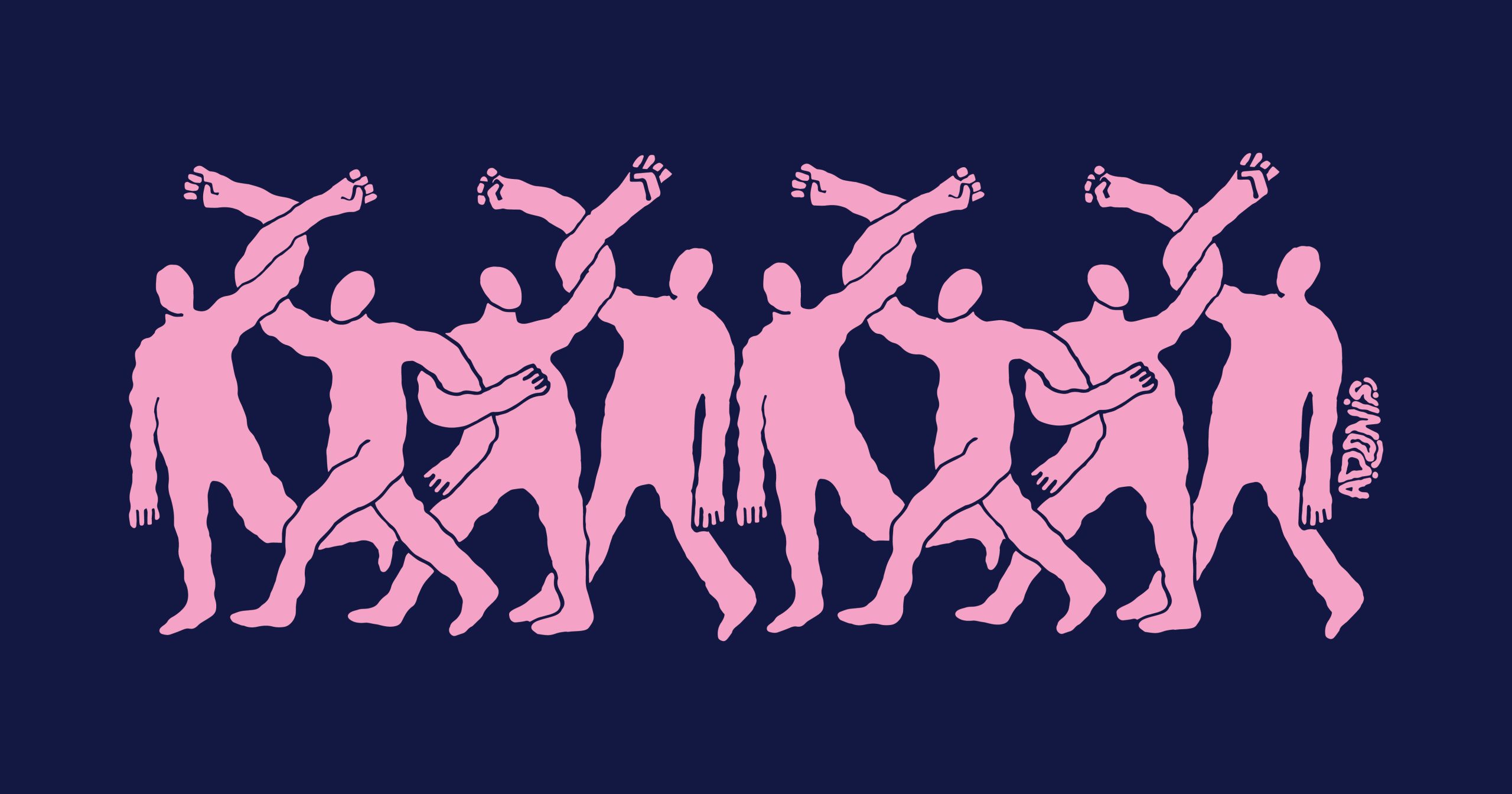
Featured Photo: Adonis Papadopoulos (@adonis.design) for Fine Acts (@fineacts.co) under a Creative Commons-Attribution-NonCommercial-ShareAlike 4.0 International license (CC-BY-NC-SA).