

In May 2026, members of the MCLD team attended the WILD Forum, the WILD Network’s Leadership for Social Impact Forum, bringing together leaders from over 100 countries to explore leadership, inclusion, and systems change. The Forum is a space designed not just for inspiration, but for the kind of honest, substantive conversation that actually moves people.
Several key reflections emerged from the Forum that our members and team will carry forward:

Aisha Hamza, MCLD in Nigeria (SACDN) Board Member
Advancing women into senior decision-making roles requires a profound shift from performative tokenism to meaningful agency, moving past simply counting female leaders to fundamentally altering the architectural power dynamics of organizational culture. True institutional evolution demands that we dismantle the systemic double-bind where women are simultaneously penalized as “aggressive” for asserting authority or dismissed as “weak” for leading with empathy. We must actively redefine organizational metrics to treat relational intelligence, adaptability, and the creation of psychological safety not as secondary soft skills, but as core, measurable leadership strengths that are technically essential for navigating complex, multi-stakeholder social impact spaces.
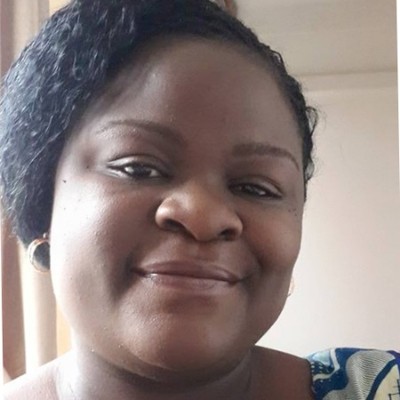
Cathy Amenya, MCLD Programs and Partnerships Manager
One of the sessions that stayed with me most was Sona Jobarteh’s on locally led development. As someone who has spent years working in this sector and wrestling daily with the challenge of shifting mindsets, including among our own people, her approach to education felt like someone finally naming something I had been carrying for a long time. Sona’s framing reminded me that reimagining education is not just a policy conversation. It requires a different philosophy altogether, one that places cultural knowledge alongside practical skills and treats learners as whole people with agency. We speak about community-led development, but the deeper challenge is convincing people, including well-meaning practitioners, that communities are already capable, already knowledgeable, already leading. That conviction cannot be imported from outside. It has to be grown from within, and it starts with how we raise and educate our children. Before any external transformation can happen, something more personal has to shift. We have to be willing to change our own minds first.
Featured Photo: WILD Network