
![Image description: A woman stands surrounded by green plants up to her waist, smiling and holding a green stalk. She wears a maroon head wrap and a dark, patterned overshirt over a white dress.]](https://mcld.org/wp-content/uploads/2026/08/female-farmer-scaled.jpg)
Article by Lianna Tabar-Downes
In rural Ethiopia, climate-related stresses increasingly affect livelihoods and essential services. WEEMA International (WEEMA) works with those who understand these realities best – community networks, local institutions, and local government. For over a decade, WEEMA has facilitated women’s Self-Help Groups that grow into enduring community institutions, positioned to identify priorities, generate community insights, mobilize resources, and lead collective action against multidimensional poverty. WEEMA aligns with government priorities, and brings in outside technical expertise where it can strengthen locally led solutions. Below is a sample of how these partnerships have included climate action.
Climate-resilient agriculture through women’s Self-Help Groups
Tembaro District subsistence farmers face significant food insecurity, worsened by years of drought and crop disease. WEEMA has facilitated the growth of Self-Help Groups here since 2014; they have since grown into a federated structure of 20 Cluster Level Associations (CLAs) and two Federations. In 2026, WEEMA piloted an approach that puts SHGs at the center of support for smallholder farmers: 20 CLAs now support more than 500 women farmers who are also SHG members, replacing an earlier model in which WEEMA and government worked directly with individual farmers. In our experience, this SHG-centered model works better because SHG leaders already have trusted relationships with their members: they speak directly with women farmers about their challenges and crop preferences, then work with the district agriculture office and government Development Agents to identify suitable drought-resistant seed varieties. WEEMA procures and delivers the seed; SHG leaders distribute it as a loan, using the same repayment systems their members already know from SHG savings and lending, and repayments replenish a revolving seed fund for future seasons. The result is a model that builds more farmer ownership and adapts faster to real needs, season to season, than a top-down distribution ever could.
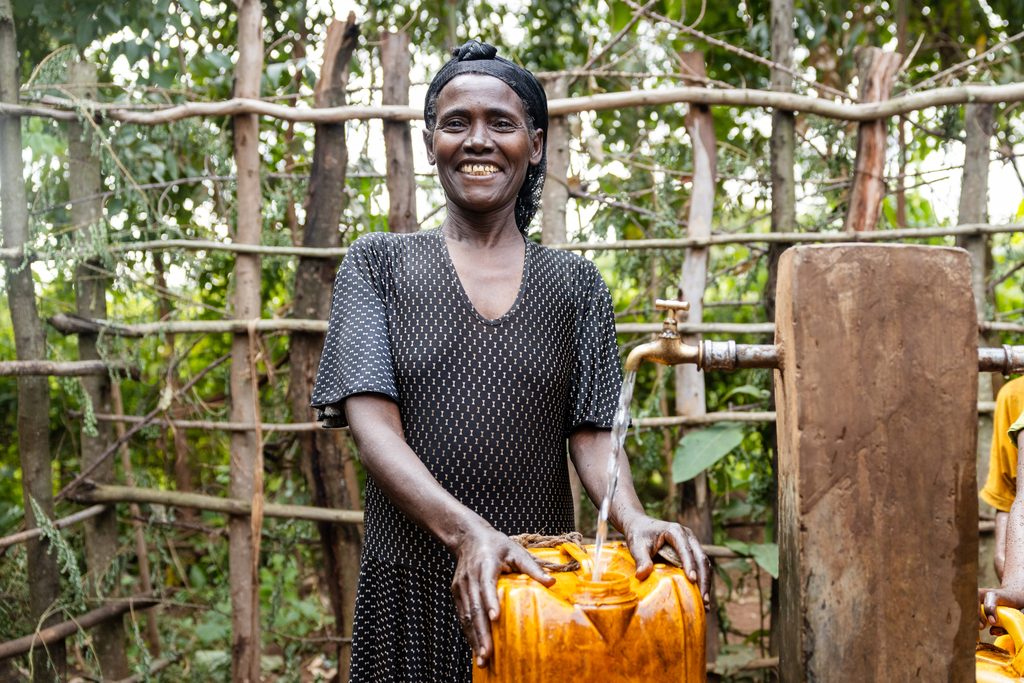
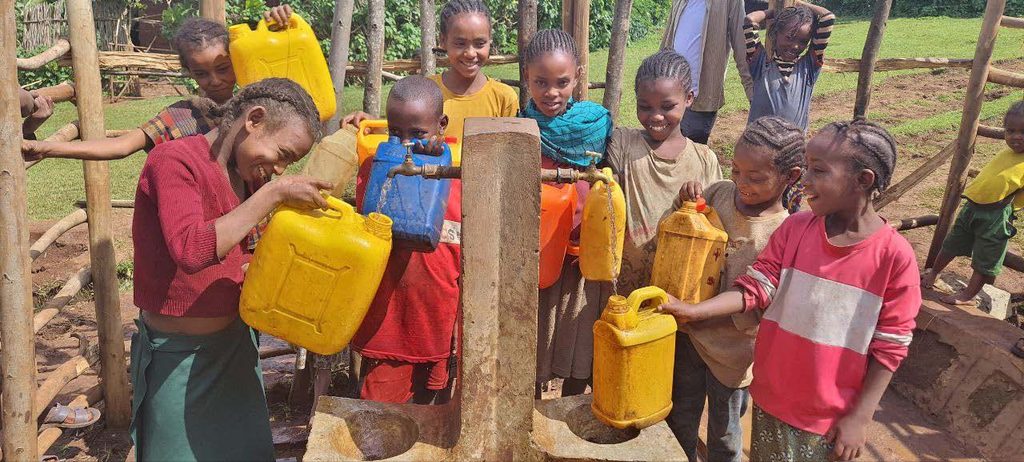
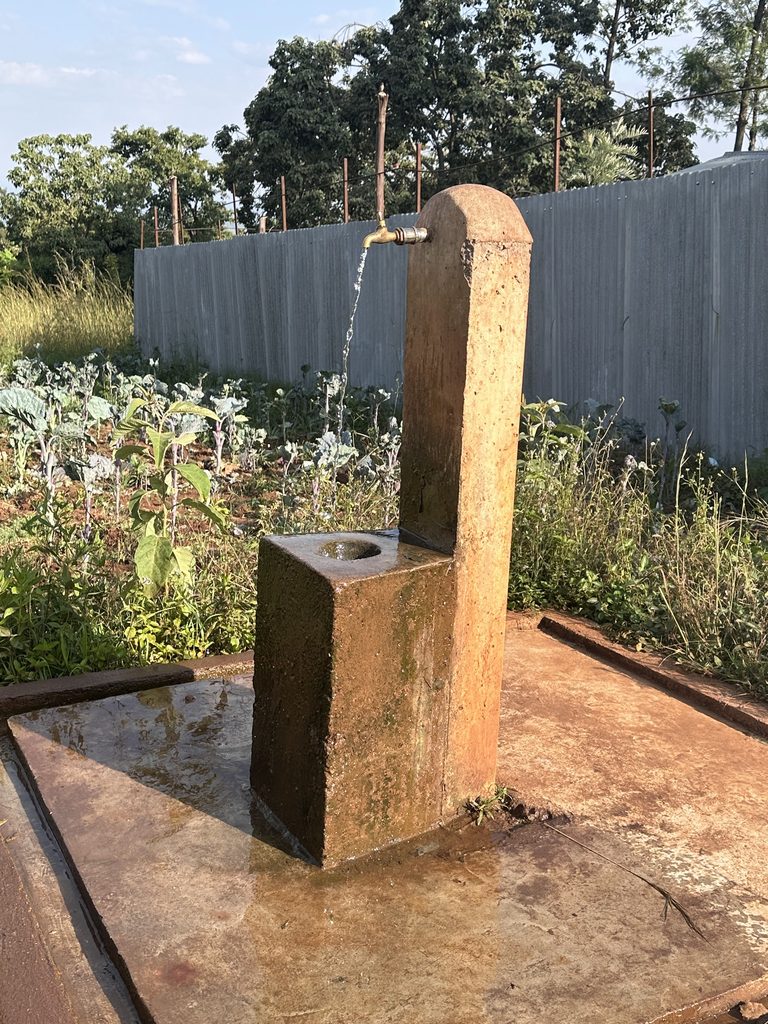
Community ownership of clean water systems
WEEMA partners with community members, local government water offices, and Inter Aide France as a technical expert to expand clean water access while establishing systems for long-term local management. Community engagement begins before construction. Community volunteers are selected and trained to form Water Federations, Associations, and Water Management Committees; participate in trench excavation and water-point design decisions; and agree on user fees and responsibilities for future maintenance. InterAide engineering experts apply proven design principles to build durable systems, including features such as channeling runoff from water points to nearby gardens. Alongside construction, communities plant trees and undertake erosion-prevention measures to protect the surrounding environment and water infrastructure.
Solar power for essential local institutions
Many rural schools and health facilities in WEEMA’s operating areas struggle with unreliable electricity or lack a grid connection altogether. At Mudula Primary Hospital, unreliable grid electricity and dependence on a costly diesel generator undermined essential health services.
WEEMA partnered with Aid Pioneers and Ethiopia’s Solar Energy Foundation to install a solar photovoltaic and battery-storage system, providing more reliable, lower-emission power and reducing dependence on diesel. The system is projected to save the hospital nearly $350,000 over ten years. Savings will support treatment costs and/or an annual savings fund for anticipated long-term maintenance.
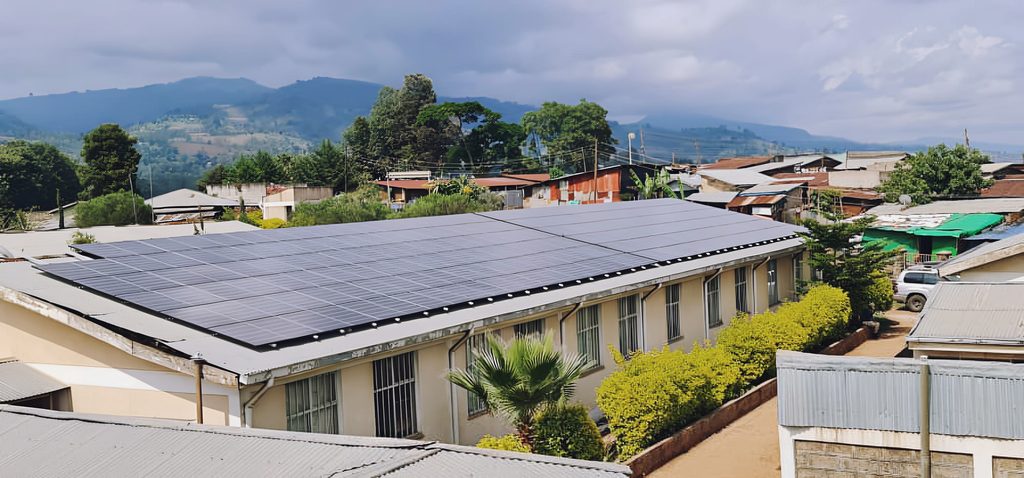
Local institutions were active partners throughout. The Tembaro Health Office and hospital administration helped shape the project, provided data for system design, prepared the facility, and designated staff to be trained and responsible for ongoing monitoring and maintenance. WEEMA and partners are now applying this approach at other health and education facilities later this year.
Across these initiatives, local ownership is not something added at the end of a project. Community groups, government specialists, and local institutions bring knowledge, relationships, and long-term responsibility. External organizations can contribute resources and technical expertise, but durable climate resilience depends on strengthening the people and institutions that will remain long after a project ends.
Featured Photo: A smallholder farmer in Tembaro District, where Self-Help Groups now help distribute seeds each planting season.