
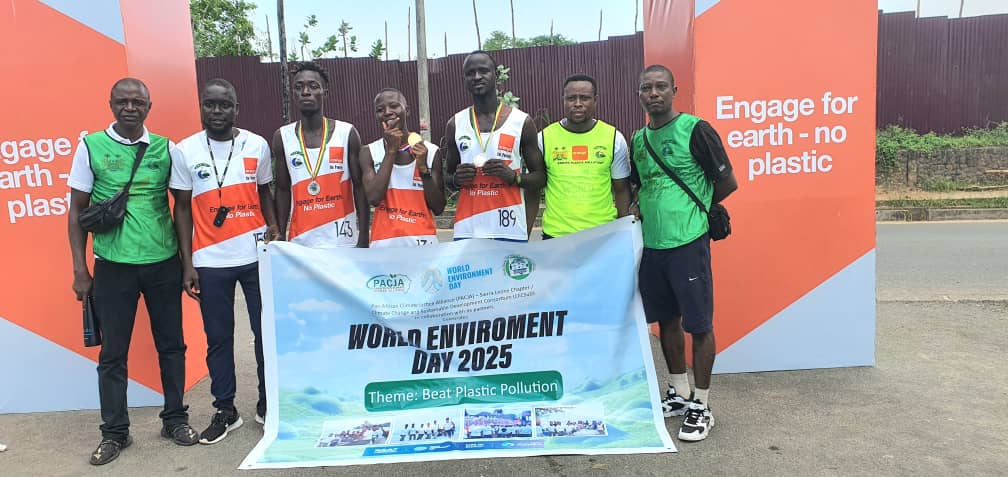
Article by David J Allieu, Executive Director of the Civil Society Advocacy Network on Climate Change and the Environment – Sierra Leone (CAN-SL)
As climate change becomes an increasing threat to forests and landscapes, a Sierra Leonean coalition of civil society organizations is inspiring communities to protect the environment and adapt to climate change for sustainable livelihoods.
The Civil Society Advocacy Network on Climate Change and the Environment (CAN-SL) was established through consultations with civil society organizations across eight districts of Sierra Leone, recognizing that climate change, deforestation, pollution, and environmental degradation cannot be addressed alone. Instead, lasting change requires partnerships between communities, local authorities, government agencies, women’s groups, youth leaders, Indigenous Peoples, and development partners.
CAN-SL demonstrates that community-led climate action is most effective when it combines local leadership, practical environmental restoration, and education. Rather than focusing only on advocacy, CAN-SL combines policy engagement with community action. The network trains local organizations, raises awareness about climate change and sustainable farming, promotes alternatives to harmful chemicals and pesticides, and supports communities to protect forests and natural resources while strengthening livelihoods.
Community Tree Planting: One of CAN-SL’s most visible achievements has been large-scale community tree planting. Working alongside local communities and government partners, the network supported the planting of 4,000 cocoa and coffee trees in Pujehun District, creating both environmental and economic benefits for participating families. In another initiative, CAN-SL partnered with the Freetown City Council, the Environment Foundation for Africa, and the Tree Town Campaign to plant 50,000 trees in the Catchment 6B area of Freetown, helping restore a critical watershed and reduce environmental risks in the capital.
Sensitization Using Radio and Television: Community engagement remains the foundation of every initiative. Through village meetings, radio and television programs, training workshops, and outreach activities, CAN-SL builds communities’ understanding of the links between climate change, environmental health, agriculture, and human rights. For example, weekly radio discussions about environment, conservation health, chemicals, pesticides, agriculture, plastic pollution and climate change. Recent radio appearances can be watched here.
Community Monitoring: By monitoring environmental practices, CAN-SL helps ensure that community voices influence environmental governance and climate action in Sierra Leone. The process has resulted to improve on project outcomes through the indicators set for each project activity as prescribed in the project document. We do everything in collaboration with community stakeholders and some of the direct project beneficiaries. We always engage the beneficiaries directly to tell us how has the initiative helped to impact them and their community, their responses determined their participation, involvement and knowledge about the project. By using these different community framework helps to track the field activities and reports.
Key Lessons for Our Network:
- Communities are very willing to implement projects; however, the outcome of the indicators depends on those project staff, taking into consideration their integrity, honesty, transparency and accountability. Once the community sees you as someone who is honest and you involve and discuss with them every aspect and status of implementation of the project, you will get the best out of them as individuals and the whole community.
- Engage and discuss with them on every important role the need to play for the successful roll out of any project in their communities.
- Ensure women, youth, and Indigenous Peoples play central roles in planning and implementation.
- Combine ecosystem restoration with livelihood opportunities, such as planting economically valuable tree species.