
By Luis Fernando Sánchez-Rubio
CARTAGENA, COLOMBIA
La Fundación Planeta Azul Caribe (FUPAC) es una organización no gubernamental cuyo objetivo principal es investigar para 1) educar y 2) construir cultura del mar. Nació en el año 2006, en la ciudad de Cartagena de Indias, incluyendo la recopilación de los trabajos previos de su fundador, 1984-2006. Desde entonces, a través de sus programas y proyectos, busca incentivar la cultura del mar y los cuerpos de agua en la región Caribe mediante la educación, la investigación, la aplicación de la ciencia, la tecnología y la innovación.
Entre los años 2014 y 2019 desarrollamos el proyecto Navegando por Cartagena, PNxC, de Adaptación al Cambio Climático desde la adaptación al fenómeno de invernadero y el crecimiento del nivel del Mar. Ante la problemática de destrucción del manglar de la Ciudad de Cartagena y entendiendo que la ciudad viene creciendo aceleradamente, perdiendo sus condiciones marinas, creciendo sin relación a su entorno natural. En Cartagena el manglar es un “sistema natural poco apreciado y, en muchas ocasiones, destruido o ignorado”, su ubicación está donde la realidad social muestra menos oportunidades y mayores desventajas para sus gentes; en donde podrían propiciar su desarrollo.
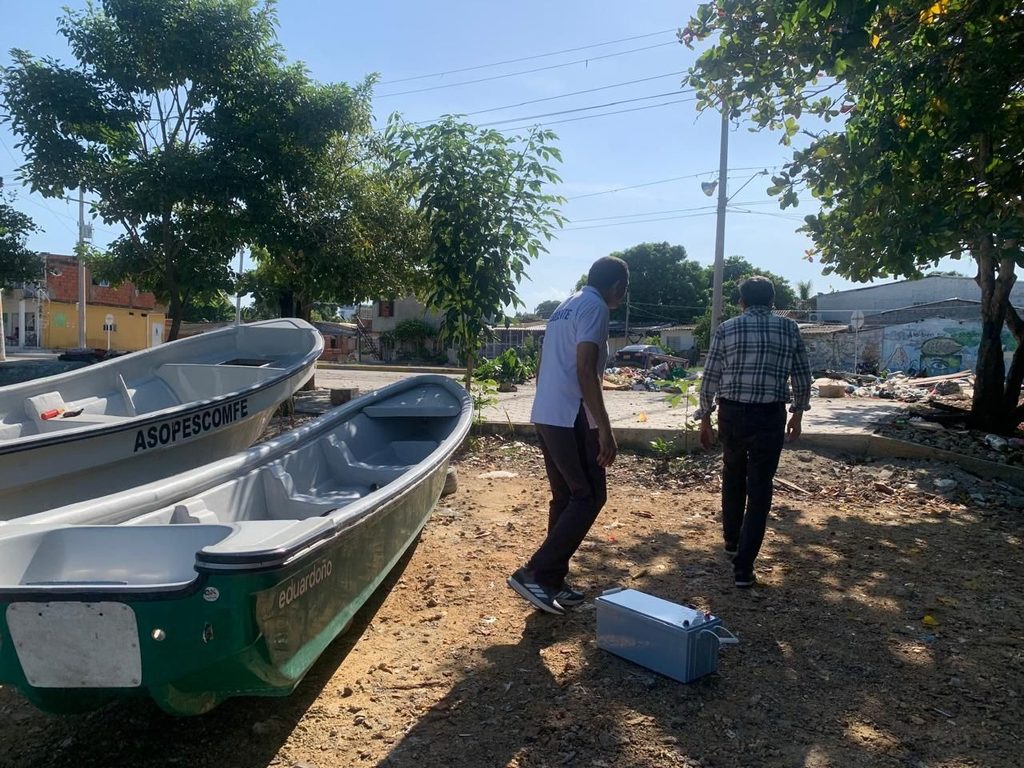
Se implementan las siguientes acciones: se crean empleos verdes para una transición energética justa, en busca del desarrollo económico de al menos 9 organizaciones sociales de tres sectores de la Ciénaga, se promueve la electro movilidad acuática sostenible; la economía circular procesos y sus variantes y mejores prácticas en el manejo de residuos.
Obtén más información en este video
CARTAGENA, COLOMBIA
The Planeta Azul Caribe Foundation (FUPAC) is a non-governmental organisation whose main objective is to conduct research to 1) educate and 2) foster a culture of the sea. It was established in 2006 in the city of Cartagena de Indias, building on the work of its founder from 1984 to 2006. Since then, through its programs and projects, it has sought to promote a culture of the sea and water bodies in the Caribbean region through education, research, and the application of science, technology, and innovation.
Between 2014 and 2019, we developed the ‘Sailing through Cartagena’ (PNxC) project on Climate Change Adaptation, focusing on adaptation to the greenhouse effect and rising sea levels. Faced with the problem of the destruction of the mangrove forests in the city of Cartagena, and recognising that the city is growing rapidly, losing its marine ecosystems and expanding out of step with its natural environment. In Cartagena, the mangrove forest is a “natural system that is little appreciated and, in many cases, destroyed or ignored”; it is situated in an area where social conditions present fewer opportunities and greater disadvantages for the local population, yet where it could foster their development.
The following actions are being implemented: green jobs are being created to support a just energy transition, with a view to the economic development of at least nine social organisations across three sectors of the Ciénaga; sustainable aquatic electric mobility is being promoted, along with the circular economy, its processes and variants, and best practices in waste management.